

Cloud operational risk management starts with a simple understanding: the cloud itself does not create risk. The way organizations manage the cloud over time creates it.
Many organizations believe that risk is mainly from cyberattacks. However, most operational failures actually result from mismanagement, such as misconfigurations, lack of visibility, poor governance, and slow response systems.
This changes the focus from security tools to management maturity.
Reducing operational risk in the cloud is not about adding more layers. It is about removing blind spots, matching systems with business logic, and consistently managing change.
The Real Problem: Cloud Complexity Without Control
Modern cloud environments are not linear. They are:
- Multi-layered (apps, APIs, infrastructure)
- Multi-environment (dev, staging, production)
- Often multi-cloud
This creates a dangerous gap:
Teams deploy faster than they can manage.
And when management lags behind:
- Costs drift
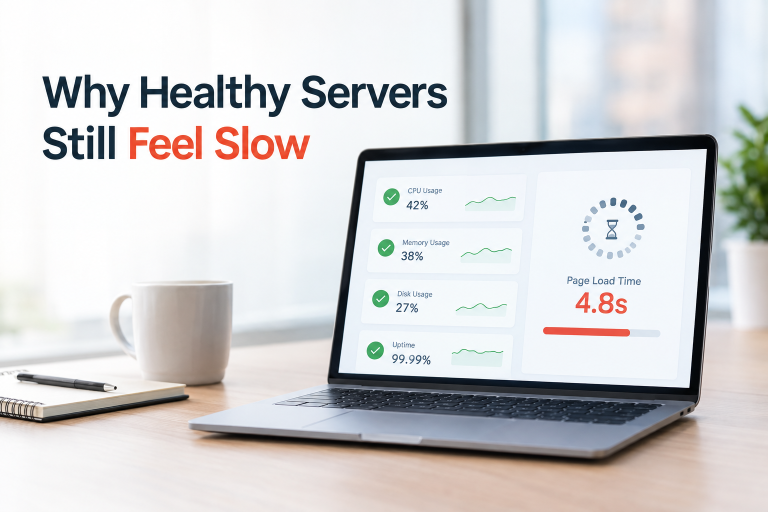
- Performance becomes unpredictable
- Security gaps appear silently
- Incident response slows down
Lack of visibility already affects a majority of enterprises in cloud environments, making it one of the biggest operational risks today.
This is where cloud monitoring and management services become crucial. They provide the visibility and control needed to keep fast-changing environments stable.
The Visibility Gap: Where Most Risks Begin
In many cloud environments, teams often assume visibility instead of actively verifying it.
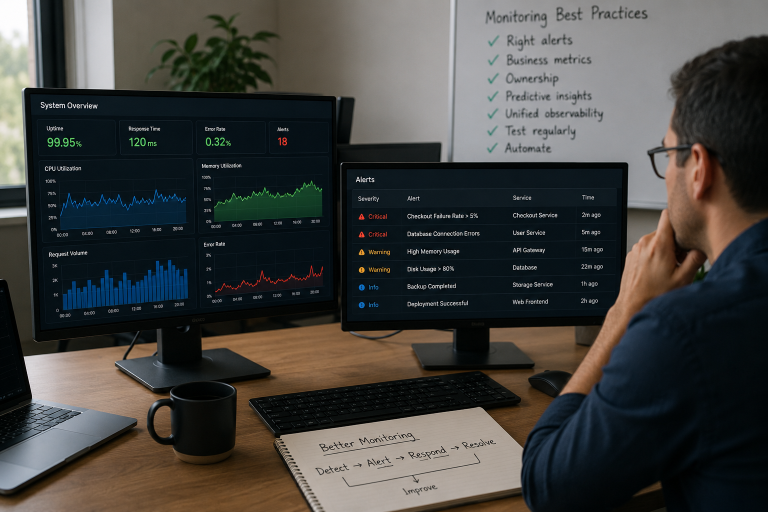
Dashboards exist, logs are collected, and alerts are set up. But the real question is, are these insights actually helping teams make faster and better decisions?
This is where cloud operational risk management becomes critical, as it connects visibility with real-time decision-making and control.
In most cases, the answer is no.
Different teams work in silos, each seeing only a part of the system. Infrastructure metrics are in one place, application performance is in another, and security signals are somewhere else. What seems like “visibility” is often just scattered data.
This fragmentation causes delays.
- An issue might be spotted but not fully understood.
- A spike in usage might be visible but not explained.
- A misconfiguration might occur but stay unnoticed until it causes problems.
Over time, this lack of clarity becomes an operational risk.
True visibility is not about having more dashboards. It is about having connected insights that show the real state of the system in real time.
Best Practices to Reduce Operational Risk in the Cloud
Reducing risk is not just about reacting to problems. It is about creating systems that stop problems from getting worse.
1. Move from Reactive Monitoring to Continuous Awareness
Many teams still depend on alerts to notify them when something goes wrong. By the time an alert is triggered, the problem has already begun to impact the system.
A better approach is continuous awareness:
- Track system behavior in real time
- Identify anomalies early
- Understand trends before they turn into incidents
This changes operations from reactive to proactive.
2. The Silent Risk of Misconfigurations
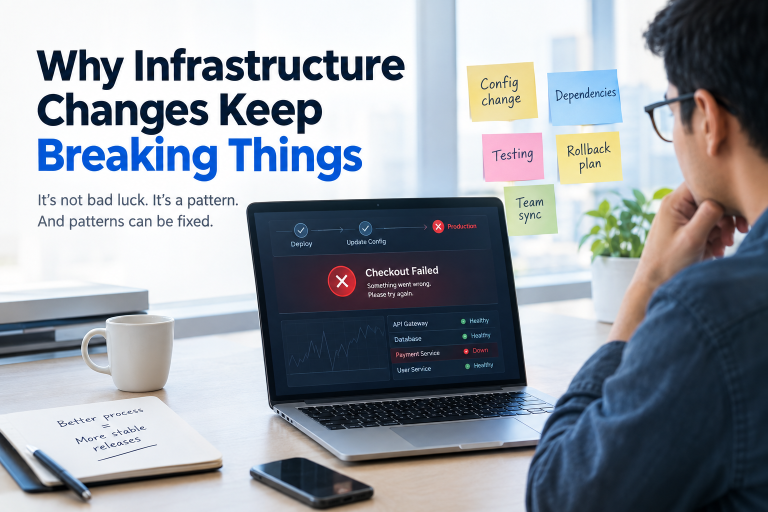
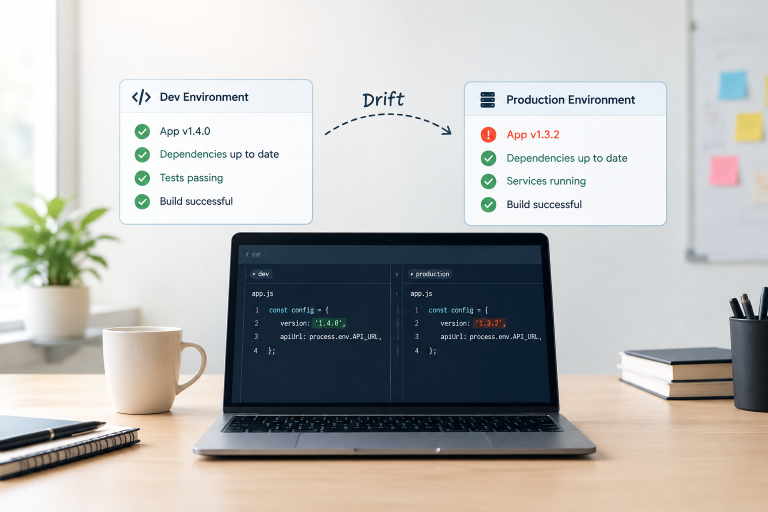
One of the most common sources of operational risk in the cloud is misconfiguration. Unlike hardware failures, misconfigurations are often hidden until they cause a problem.
Imagine a scenario where a development team launches a new storage service. The system works well, but access permissions are overly broad. There is no immediate effect, so the issue goes unnoticed. Weeks later, sensitive data gets exposed—not due to a complex attack, but because of a simple mistake.
This isn’t a unique situation. As organizations move to cloud migration services, they often transfer existing practices into new environments without fully adjusting to cloud-native models. This creates inconsistencies that increase risk over time.
To reduce this risk, a change in mindset is necessary. Configurations shouldn’t be seen as one-time setups. They require ongoing validation, monitoring, and adjustments as the environment changes.
3. Strengthening the Shared Responsibility Model
Cloud environments work on a shared responsibility model. People often get it wrong. Cloud providers keep the underlying infrastructure safe. Organizations have to manage who accesses what, settings and data.
Gaps in understanding can cause operational risk. If responsibilities are not clear, important areas can be missed. When teams know who owns what they can be held accountable. Respond faster.
A well-defined responsibility model helps build a base, for both security and stability.
4. Build Governance That Enables, Not Restricts
Governance is often misunderstood as control that slows teams down. But effective governance does the opposite.
It creates clarity.
When policies are well-defined and automated:
- Teams know what is allowed
- Decisions are faster
- Risks are minimized without constant oversight
The goal is to create guardrails, not roadblocks.
5. The Shift Toward Predictive Operations
One of the biggest shifts in cloud management today is the move toward predicting problems instead of just reacting to them.
Rather than waiting for something to break, teams are starting to use data to spot patterns early. For example, a streaming platform might notice that traffic always spikes during certain events. With that insight, they can prepare their infrastructure in advance instead of scrambling at the last minute.
This kind of proactive approach makes a real difference. It reduces unexpected disruptions, improves reliability, and gives teams more confidence in how their systems will perform.
It does not remove uncertainty completely, but it helps keep it under control before it turns into a real issue.
6. Continuous Optimization as a Core Practice
Failures are not the only source of operational risk. Long-term effects can also result from inefficiencies. Reduced performance and needless expenses can result from overprovisioned resources, underutilized services, and inconsistent scaling tactics.
Organizations that adopt cloud management services often realize that optimization is not a one-time effort. It is a continuous process that evolves with the environment.
For example, a business running multiple applications in the cloud may initially allocate more resources than needed to ensure stability. As usage patterns become clearer over time, teams can optimize these resources to reduce costs without impacting performance.
By maintaining a balance between dependability and efficiency, this ongoing improvement lowers operational and financial risks.
7. Simplify Alerting to Improve Response Time
Too many alerts can be as dangerous as too few.
When teams are overwhelmed with notifications:
- Critical alerts get missed
- Response time increases
- Trust in monitoring systems decreases
Improving alert quality involves focusing only on what truly matters. Clear, actionable alerts enable faster decisions and better outcomes.
Conclusion:
Cloud operational risk management goes beyond a technical approach; it requires continuous practice that determines how effectively teams control and improve cloud environments over time. Reducing operational risk in the cloud requires managing complexity with clarity and discipline.
With the right mix of monitoring, governance, automation, and optimization, cloud operations shift from constant reaction to a more controlled and strategic approach.
A well-managed cloud environment does more than prevent downtime. It builds confidence, improves performance, and allows teams to focus on progress instead of firefighting