

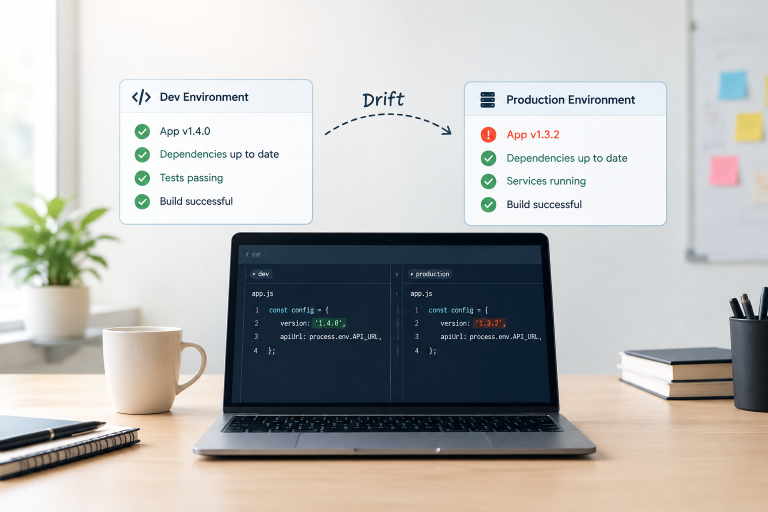
Why Dev and Production Environments Drift
It’s 11:47pm. The deploy that passed every test an hour ago just took production down. Nobody can figure out why, because nothing in staging looked like this. Someone finally says…
Read article →
Growing a SaaS product is really exciting at first. Until you start to see problems behind the scenes. The things that worked well when you had 500 users do not work when you have 50,000 users.. The team that used to add new features every week is now spending most of their time just trying to keep everything running. This is exactly where DevOps for SaaS becomes essential, helping teams handle growth without losing control.
If this sounds like something that happened to you. You are not the one. Every SaaS company has this problem at some point. The product is good, customers like it and the business is growing. But something is not working under the surface.
This is where DevOps for SaaS starts to play a critical role. It’s not that the team lacks talent, it’s just that the tools, habits, and processes that worked well at a smaller scale weren’t designed for the challenges that come with rapid growth. Let’s have an honest conversation about the hurdles that arise — and what really makes a difference.
Remember when pushing an update was exciting? The team would ship something, users would love it, and everyone felt good. As the product grows, that same act starts feeling risky. More users means more ways things can go wrong. A bug that used to affect five people now affects five thousand.
Teams start getting nervous. They push less often. Review cycles get longer. What was once a quick Friday deployment becomes a stressful, all-hands Tuesday night event with three people monitoring dashboards just in case.
“We went from shipping every day to shipping once a month — not because we were building less, but because we were scared of what might break.”
The honest solution here is to build confidence in our process, not just add more caution. This means testing things in a way that mimics what real users do. We need to catch problems before they reach our customers. We should also make it easy to roll back quickly if something goes wrong. Small frequent releases with a clear safety net are better than scary releases.
Here’s something almost every growing SaaS team has experienced: someone makes a quick change to a server “just to test something” and then forgets to document it. Weeks later, something breaks and nobody can figure out why — because the way things are actually set up no longer matches the way anyone thinks they’re set up.
This happens little by little without anyone noticing. Then all of a sudden. Your test environment works differently than the environment. Two parts of your app work differently from each other. New team members spend their two weeks just trying to understand how everything works together.
Working with a DevOps as a service provider s really helpful in this case. They come in without assumptions, map out what is actually happening and help you put systems in place so that changes are tracked, written down and consistent. It is like cleaning up a messy drawer that has been a mess for years. It takes some work at first but everything becomes so much easier, after that.
Moving to microservices often feels like the right move when scaling a SaaS product. It helps teams work independently and ship faster.
But it also brings added complexity.
Instead of one system, you now manage multiple services that depend on each other. More connections mean more chances for things to break—and harder debugging.
A Practical Shift
Manage complexity instead of avoiding it.
Importantly we need to write down how our microservices interact with each other. When we are clear about how things work it’s less confusing. Microservices need to be understood and documenting microservices is key.
In the early days, security often gets pushed aside while teams focus on growth. That makes sense. But as your SaaS scales, the stakes get higher—more customer data, stricter compliance expectations, and increased attention from potential threats.
The mistake is treating security as a one-time audit. In reality, it needs to be continuous, because every new feature can introduce new risks.
This is where DevOps consulting services help by building security into your everyday workflows. From automated checks in pipelines to better access control, the need of security integral becomes clear—security becomes part of how you ship code, not something extra to worry about.
5. Cloud Costs Start Growing Faster Than Revenue
This one tends to sneak up on teams. The cloud bill was fine last quarter. This quarter it jumped 40%. Nobody made a deliberate decision to spend more — it just happened. Resources were added for a launch and never removed. Things were over-provisioned “just to be safe.” A new service was spun up and the old one never got turned off.
Growing SaaS companies often discover that they could be running the same workloads for significantly less if someone just took a proper look. And the fixes usually aren’t dramatic. It’s the small stuff, consistently applied, that adds up to real savings.
The challenges above aren’t rare or unusual — they’re the normal growing pains of a SaaS product finding its feet at a new scale. The companies that get through them aren’t necessarily smarter or better resourced. They’re just more honest about what’s not working and more willing to ask for help when they need it.
That might mean bringing in a DevOps as a service provider to handle the operational complexity while your engineering team focuses on the product. It might mean a short engagement with DevOps consulting services to fix one specific problem properly instead of working around it forever. Or it might just mean carving out time this quarter to address the one thing that’s been quietly causing the most pain.
Whatever the starting point — start there. Scaling is hard, but it doesn’t have to feel like a constant crisis. With the right support and the right habits, it can feel like what it’s supposed to feel like: progress.
It’s 11:47pm. The deploy that passed every test an hour ago just took production down. Nobody can figure out why, because nothing in staging looked like this. Someone finally says…
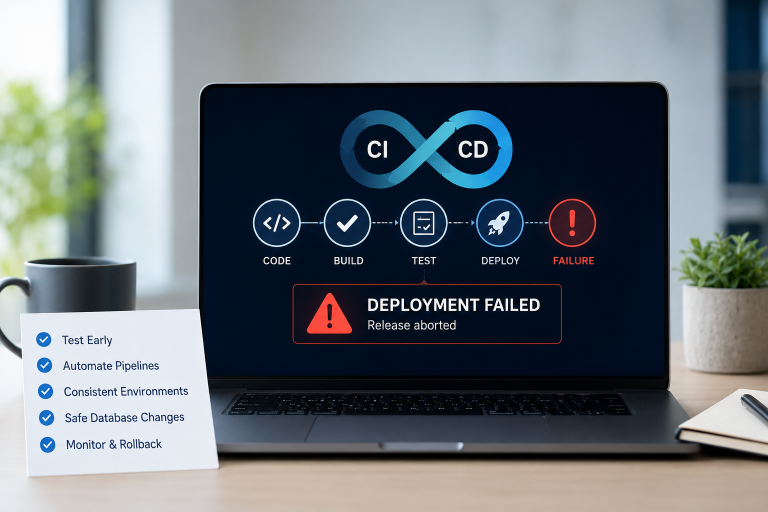
Read article →One bad release is all it takes to ruin a normal day at work. The build passes, the deploy goes out, and a few minutes later something breaks. Maybe checkout…
Read article →Nobody joins an engineering team because they love restarting servers at midnight. They join because they want to build things. Yet if you sit in on a few sprint planning…
Read article →Tell us where you are and what's slowing you down. A senior engineer will get back to you within one business day.
Our team will get back to you within one business day.

Leave a Reply