Cloud computing has come a long way from being just a basic infrastructure solution; it’s now the backbone of today’s digital transformation. Nowadays, organizations depend on cloud platforms to run their applications, manage data, facilitate remote teamwork, and provide services on a large scale. As businesses grow their digital footprint, cloud environments are becoming more intricate, which means they need smart systems that can keep everything stable, performing well, and secure—without the need for constant manual oversight.
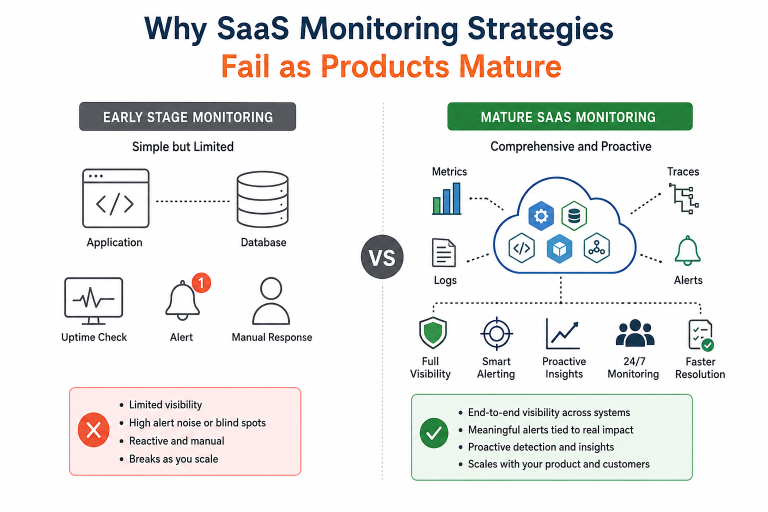
Back in the early days of cloud adoption, managing infrastructure was pretty simple. Companies would roll out virtual machines, stash their data in cloud storage, and keep an eye on performance with basic dashboards. Fast forward to today, and the cloud landscape has completely transformed. Now, organizations are juggling multi-cloud and hybrid setups, managing distributed applications across various regions, and dealing with huge volumes of real-time data. This added complexity has made manual cloud management not only inefficient but also prone to errors.
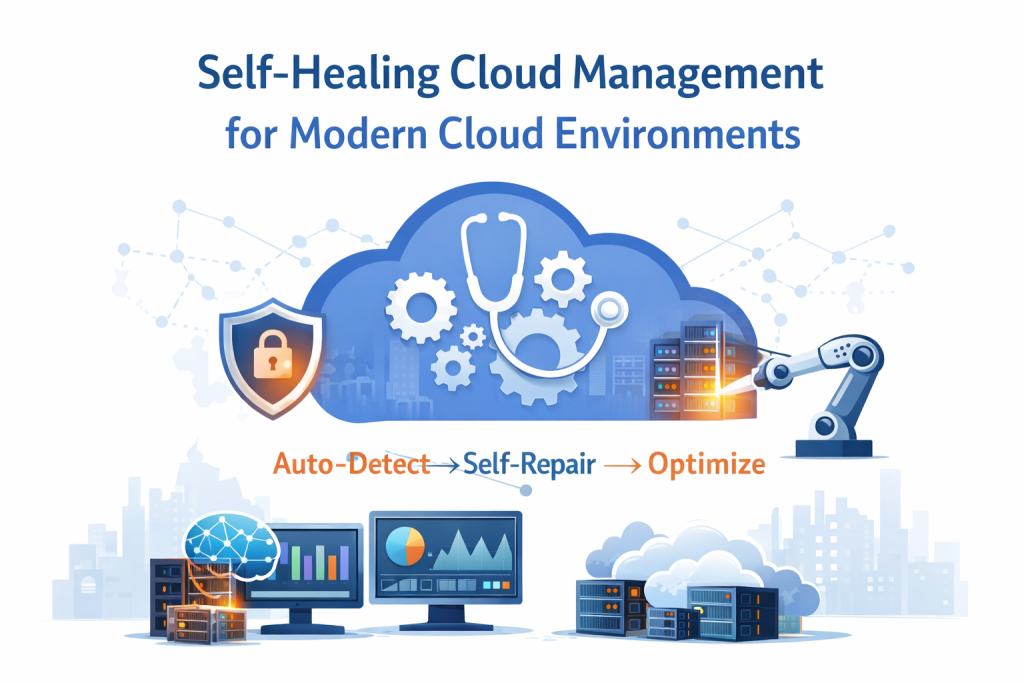
To tackle these challenges, more and more organizations are turning to cloud management services. These tools help automate operations, enforce governance, and simplify infrastructure control. While they do a great job of cutting down on operational overhead and boosting efficiency, relying solely on automation just doesn’t cut it anymore. The future of cloud computing lies in self-healing cloud management, where systems can spot problems, fix them on their own, and keep optimizing performance—all without needing a human touch.
Self-healing cloud management is a game changer for how we handle cloud infrastructure. It allows cloud environments to be smart, adaptable, and resilient, which means they can keep services running smoothly and boost operational efficiency in today’s digital landscape.
The Growing Complexity of Cloud Environments
As organizations grow their digital footprint, cloud environments are becoming increasingly dynamic and spread out. Applications aren’t just sitting on a single server or in one data center anymore; they’re now operating across various regions, cloud providers, and network layers. With the rise of microservices architectures, containerized applications, and serverless computing, we’ve gained a lot of flexibility, but it also brings a new level of operational complexity.
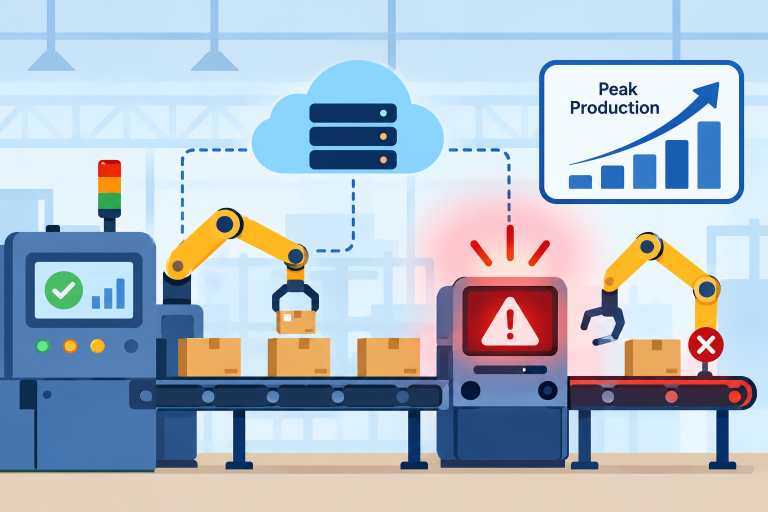
This added complexity comes with its own set of challenges. Infrastructure failures can strike at any moment, network latency can mess with user experience, and configuration errors can throw services off track. Even minor performance hiccups can lead to major downtime and financial setbacks if they’re not caught and fixed quickly.
In traditional cloud operations, there’s a heavy reliance on monitoring tools and engineering teams to respond to alerts and manually resolve issues. While this method can work in smaller setups, it becomes a real headache when scaled up. Engineers might find themselves spending hours troubleshooting problems, restarting services, or reallocating resources, which only delays recovery and drives up operational costs.
Self-healing cloud management steps in to tackle these challenges by bringing automation and intelligence into the mix. Rather than just reacting to failures, these cloud systems are always on the lookout, continuously monitoring their environment, spotting potential risks, and automatically taking corrective actions. This proactive strategy helps minimize downtime and keeps cloud environments running smoothly and efficiently.
Understanding Self-Healing Cloud Management
Self-healing cloud management refers to the ability of cloud infrastructure to automatically detect issues, analyze system behavior, and resolve problems without human involvement. It combines automation, real-time monitoring, and intelligent decision-making to maintain system health and performance.
In a self-healing cloud environment, the system continuously collects operational data such as CPU usage, memory utilization, network traffic, and application performance metrics. This data is analyzed to identify anomalies or potential failures. When an issue is detected, automated workflows trigger corrective actions based on predefined policies.
For example, if a virtual machine crashes, the system automatically launches a replacement instance. If an application becomes unresponsive, it is restarted immediately. If a database experiences high load, traffic is distributed across multiple nodes to maintain performance. These automated responses ensure that services remain available and operational at all times.
The key advantage of self-healing cloud management is that it reduces dependency on manual intervention. IT teams no longer need to monitor systems constantly or respond to every alert. Instead, they can focus on innovation, system design, and strategic improvements while the infrastructure manages routine operational tasks.
Self-healing cloud management also improves reliability by reducing human errors and ensuring consistent execution of policies across cloud environments.
Key Components of Self-Healing Cloud Infrastructure
Self-healing cloud infrastructure is built on several core components that work together to ensure continuous stability and performance.
Continuous Monitoring is the foundation of self-healing systems. The cloud environment must continuously track performance metrics and detect anomalies in real time. Without monitoring, automated corrective actions cannot be triggered effectively.
Automation Engines are responsible for executing predefined workflows when issues are detected. These workflows may include restarting services, scaling resources, applying patches, or rerouting traffic.
Policy-Based Governance ensures that automated actions follow organizational standards and compliance requirements. Policies define how systems should respond to different scenarios and ensure that security and operational guidelines are maintained.
Intelligent Decision-Making enables the system to choose the best corrective action based on real-time data. This reduces unnecessary actions and ensures efficient resource utilization.
Together, these components create a self-healing cloud environment that can maintain stability without constant human oversight.
The Role of Intelligent Migration in Self-Healing Cloud
Creating a self-healing cloud environment usually kicks off with shifting workloads to modern cloud platforms. Traditional systems and legacy infrastructure just don’t have the flexibility and automation needed for self-healing operations. That’s where smart migration steps in.
Modern cloud migration services are designed to help organizations move from outdated or on-premise systems to cloud-native environments that embrace automation and resilience. These services take a close look at workloads, pinpoint dependencies, and suggest the best migration strategy.
These days, migration isn’t just about transferring data and applications; it’s about reshaping infrastructure to enable intelligent operations. Automated migration tools can spot compatibility issues, tweak configurations, and make sure applications run smoothly in their new setting.
Self-healing features are also woven into the migration process. If something goes wrong during migration—like network hiccups or configuration blunders—automated systems can retry the process, switch to backup resources, and pick up right where they left off. This minimizes downtime and helps ensure a seamless transition.
By embracing intelligent migration, organizations lay down a solid foundation for self-healing cloud management and long-term operational stability.
AI and Automation Driving Self-Healing Capabilities
Artificial intelligence and automation play a central role in enabling self-healing cloud environments. AI systems analyze large volumes of operational data and identify patterns that indicate potential failures or performance issues. This allows cloud infrastructure to predict problems before they occur and take preventive action.
Predictive analytics helps identify resource bottlenecks, hardware failures, and unusual traffic patterns. For example, if a server shows signs of performance degradation, the system can allocate additional resources or move workloads to a healthier environment before users experience any disruption.
Automation further enhances self-healing capabilities by handling routine operational tasks such as patch management, scaling, and configuration updates. This reduces manual effort and ensures consistency across cloud environments.
AI-driven self-healing systems also improve cost efficiency by optimizing resource usage and reducing unnecessary infrastructure consumption. This ensures that cloud environments remain both reliable and cost-effective.
Managing Multi-Cloud and Hybrid Cloud Environments
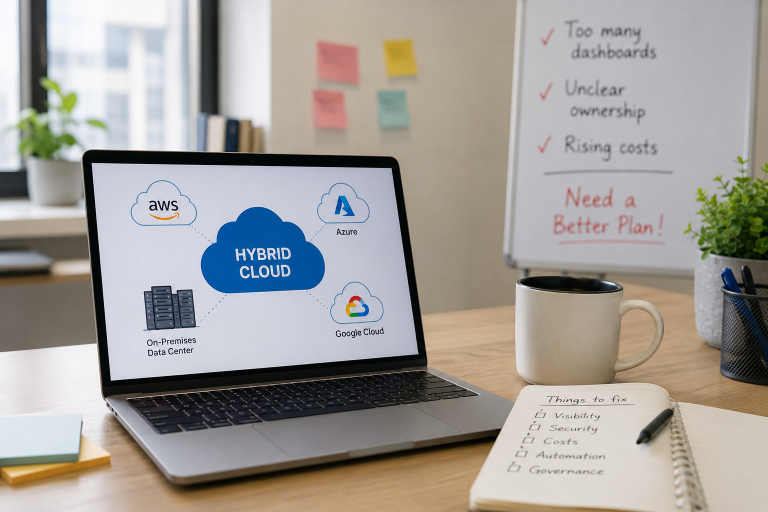
Most organizations today operate in multi-cloud or hybrid environments to improve flexibility and reduce dependency on a single provider. While this approach has important advantages, it also brings operational challenges like inconsistent policies, limited visibility, and complex infrastructure management.
Self-healing cloud management simplifies multi-cloud operations by providing centralized visibility and automated control across different platforms. You can apply infrastructure policies consistently, and it can automatically fix performance issues no matter which cloud provider you use.
This unified approach helps organizations keep their operations stable and ensures that cloud environments work smoothly across different regions and platforms.
By integrating automation and smart monitoring, self-healing cloud management reduces complexity and improves overall governance in multi-cloud environments.
Security in Self-Healing Cloud Environments
Security is a critical component of self-healing cloud management. As cloud infrastructure becomes more distributed, the risk of cyber threats and unauthorized access increases. Self-healing cloud systems address this challenge by integrating automated security mechanisms into infrastructure operations.
Continuous monitoring helps detect suspicious activities, unauthorized access attempts, and potential vulnerabilities in real time. Automated security tools can apply patches, block malicious traffic, and enforce compliance policies without human intervention.
Zero Trust principles further strengthen cloud security by ensuring that every access request is verified before granting permissions. This proactive approach reduces the risk of data breaches and improves overall system resilience.
Self-healing security ensures that cloud environments remain protected while maintaining operational efficiency.
The Importance of Continuous Monitoring and Intelligent Management
Continuous monitoring is essential for maintaining self-healing cloud environments. Without real-time visibility, systems cannot detect issues or respond effectively. Monitoring provides the data required for intelligent decision-making and automated corrective actions.
This is where cloud monitoring and management services play a crucial role. These services provide deep insights into infrastructure health, application performance, network activity, and security posture. By analyzing real-time data, monitoring platforms enable automated responses that maintain system stability and performance.
Intelligent monitoring also helps organizations identify performance trends, optimize resource allocation, and improve long-term operational planning. With continuous monitoring in place, cloud environments become more predictable and reliable.
Business Benefits of Self-Healing Cloud Management
Self-healing cloud management offers a host of benefits for businesses. It boosts operational efficiency by allowing automated systems to take care of routine tasks and handle incidents. This leads to greater reliability, as these systems can quickly identify and fix problems, minimizing downtime and service interruptions.
Cost savings become more achievable with smart resource management and automated scaling. Plus, security gets a boost from ongoing monitoring and strict policy enforcement, which helps lower the chances of cyber threats.
Organizations also enjoy enhanced visibility and control over their cloud environments, which paves the way for quicker decision-making and better strategic planning. All these advantages make self-healing cloud management an essential part of today’s cloud strategies.
Conclusion
Self-Healing Cloud Management is quickly becoming a must-have for today’s cloud environments. As the complexity of cloud infrastructure keeps increasing, organizations are on the lookout for smart systems that can maintain stability, enhance performance, and ensure security—all without the need for constant manual oversight.
By embracing automation, intelligent migration, and ongoing monitoring, businesses can create resilient and future-proof cloud setups. This blend of proactive infrastructure management and smart monitoring allows organizations to concentrate on innovation while keeping their operations running smoothly.
Self-healing cloud environments are paving the way for the future of cloud computing, where systems can autonomously monitor, adapt, and fix issues as they arise. Companies that jump on this bandwagon now will be in a stronger position to handle the digital infrastructure of tomorrow and fully harness the power of cloud technology.