
Cloud technology has changed how businesses store data, run software, and scale operations — without buying a single physical server. If you have ever used Google Drive, streamed a movie on Netflix, or checked your email on a phone, you have already used cloud technology in action.
Many businesses still wonder whether cloud technology is right for them, or how it actually works under the hood. This guide covers everything — from the basic definition to real-world use cases, security considerations, and how cloud technology compares to traditional on-premise setups.
What Is Cloud Technology?
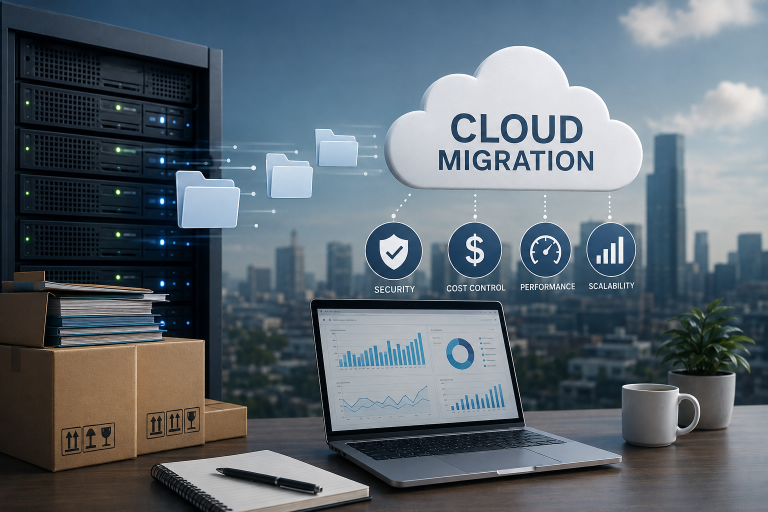
Cloud technology refers to the delivery of computing services — including servers, storage, databases, networking, software, and analytics — over the internet rather than through locally installed hardware or software. The term "cloud" is simply a metaphor for the internet.
Instead of owning a physical data center, you access computing resources on demand from a provider like Amazon Web Services (AWS), Microsoft Azure, or Google Cloud Platform. You pay for what you use, scale up when you need more, and scale down when you do not.
Key Insight: Cloud technology is not a single product — it is a model for accessing and delivering computing resources. The "cloud" is someone else's data center, made available to you over a secure internet connection.
The concept gained mainstream traction in the mid-2000s when AWS launched its first cloud services. Since then, cloud computing has become the default infrastructure model for startups, SaaS companies, ecommerce platforms, and enterprises alike.
According to Gartner, worldwide public cloud services spending is projected to exceed $675 billion in 2024 — a figure that reflects just how central cloud technology has become to modern business operations.
How Cloud Technology Works
Here is what you need to know about the mechanics behind cloud technology.
When you upload a file to cloud storage or open a web-based application, your request travels over the internet to a remote data center. That data center contains physical servers, networking equipment, and storage systems — all managed by the cloud provider.
The cloud provider uses a technique called virtualization to divide those physical resources into multiple virtual environments. This means dozens or hundreds of customers can share the same physical hardware without interfering with each other. Each customer gets their own isolated slice of resources.
The three delivery layers
Cloud technology operates across three distinct layers, each serving a different purpose:
- Infrastructure layer: Physical and virtual hardware — servers, storage, networking.
- Platform layer: The operating systems, databases, and development tools that sit on top of the infrastructure.
- Application layer: The software end users actually interact with — email, CRM tools, project management apps.
These layers map directly to the three main service models you will encounter: IaaS, PaaS, and SaaS.
Types of Cloud Technology: IaaS, PaaS, and SaaS
Cloud technology comes in three primary service models. Understanding the difference helps you choose the right approach for your business.
Comparison of cloud technology service models
| Service Model | What You Manage | What the Provider Manages | Best For |
|---|---|---|---|
| IaaS (Infrastructure as a Service) | OS, apps, data, runtime | Physical servers, networking, storage | Developers needing raw compute power |
| PaaS (Platform as a Service) | Applications, data | Infrastructure + OS + runtime | SaaS companies building and deploying apps |
| SaaS (Software as a Service) | Just your data and settings | Everything else | Businesses using ready-made software |
IaaS (Infrastructure as a Service) gives you virtual machines, storage, and networking on demand. You manage the operating system and everything above it. AWS EC2 and Google Compute Engine are examples. This model suits teams that need maximum control without buying physical hardware.
PaaS (Platform as a Service) adds a managed runtime environment on top of the infrastructure. You focus on writing and deploying your application — the platform handles the OS, security patches, and scaling. Google App Engine and Heroku are common examples. SaaS product companies building web applications benefit most from this model.
SaaS (Software as a Service) is cloud technology at its most accessible. You open a browser, log in, and use the software. No installation, no maintenance, no servers to manage. Tools like Salesforce, Slack, Shopify, and even Adobe Creative Cloud software fall into this category. Adobe Creative Cloud software, for instance, delivers the full Adobe suite — Photoshop, Illustrator, Premiere Pro — directly through the cloud, eliminating the need for local installation or manual updates.
Benefits of Cloud Technology
The shift to cloud technology delivers tangible advantages across cost, speed, and flexibility. Here is what businesses consistently report after making the move.
- Lower upfront costs: You do not purchase servers or build data centers. You pay a monthly or usage-based fee, turning capital expenditure into operational expenditure.
- Scalability on demand: An ecommerce store running a flash sale can spin up additional server capacity in minutes. When the sale ends, it scales back down. Traditional hardware cannot do this.
- Access from anywhere: Your team can work from any device with an internet connection. This matters for distributed teams and remote-first businesses.
- Automatic updates: Cloud providers handle software updates, security patches, and hardware maintenance. Your IT team focuses on business problems, not server maintenance.
- Built-in redundancy: Most cloud providers replicate your data across multiple geographic locations. If one data center goes offline, your data remains available from another.
- Faster time to market: SaaS product companies can deploy new features without provisioning physical infrastructure. Development cycles that once took weeks can happen in hours.
For small businesses in India, cloud technology removes the barrier of expensive IT infrastructure. A five-person team can access enterprise-grade tools — CRM, accounting software, collaboration platforms — at a fraction of what it would cost to build and maintain on-premise systems.
Cloud Technology vs On-Premise Solutions
On-premise solutions mean your business owns and operates its own servers, either in your office or a co-located data center. Cloud technology means someone else runs the infrastructure and you access it over the internet.
Here is how the two approaches compare across the dimensions that matter most to small businesses and SaaS companies:
Cloud technology vs on-premise: key differences
| Factor | Cloud Technology | On-Premise |
|---|---|---|
| Upfront cost | Low — pay as you go | High — hardware purchase required |
| Scalability | Instant, on demand | Limited by physical hardware |
| Maintenance | Handled by provider | Handled by your IT team |
| Data control | Shared infrastructure | Full physical control |
| Disaster recovery | Built-in redundancy | Requires separate backup systems |
| Internet dependency | Required | Not required |
| Compliance flexibility | Varies by provider | Full control |
The honest answer is that neither model wins universally. Cloud technology is the right default for most small businesses, SaaS startups, and ecommerce companies — especially those without dedicated IT staff. On-premise makes sense for organizations with strict data sovereignty requirements, extremely high security classifications, or workloads that run more cheaply on owned hardware at scale.
A practical middle ground is the hybrid cloud model — running sensitive workloads on-premise while using cloud technology for everything else. Many Indian enterprises use this approach to satisfy regulatory requirements while still benefiting from cloud flexibility.

Cloud Technology Use Cases and Applications
Cloud technology touches nearly every part of how modern businesses operate. Here are the most impactful applications across the audiences most likely reading this.
For small businesses
- Accounting and finance: Tools like QuickBooks Online and Zoho Books run entirely in the cloud. No installation, no local backups.
- Customer relationship management: Cloud-based CRMs like HubSpot give small teams access to the same pipeline management tools as large enterprises.
- Communication and collaboration: Google Workspace and Microsoft 365 are cloud technology products that replace on-premise email servers and file storage.
For SaaS product companies
- Application hosting: SaaS companies build their products on cloud infrastructure — AWS, Azure, or Google Cloud — so they never manage physical servers.
- Database management: Managed database services like Amazon RDS or Google Cloud SQL handle backups, scaling, and replication automatically.
- Cloud artificial intelligence: Cloud artificial intelligence services — like AWS SageMaker, Google Vertex AI, and Azure Machine Learning — let SaaS companies embed machine learning models into their products without building AI infrastructure from scratch. Cloud artificial intelligence has made capabilities like natural language processing, image recognition, and predictive analytics accessible to any development team, regardless of size.
For ecommerce businesses
- Elastic hosting: Ecommerce traffic is unpredictable. Cloud technology lets stores scale server capacity automatically during peak periods — Black Friday, Diwali sales — without over-provisioning year-round.
- Content delivery networks (CDNs): Cloud-based CDNs cache product images and pages at locations close to your customers, reducing load times globally.
- Payment and fraud systems: Cloud-hosted payment gateways and fraud detection tools process transactions securely without requiring the merchant to manage the underlying infrastructure.
For teams building mobile applications, cloud technology also powers the backend services that mobile apps depend on — authentication, push notifications, real-time data sync, and analytics. The power of cloud technology in mobile app development is that it removes the need for a separate server team; developers can connect a mobile app to managed cloud services and focus entirely on the app user experience.
Cloud Security and Compliance
Security is the most common concern businesses raise about cloud technology — and it is a legitimate one. Here is an honest picture.
Cloud providers invest more in security than most individual businesses ever could. AWS, for example, maintains compliance with over 100 security standards and certifications, including ISO 27001, SOC 2, and PCI DSS. The physical security of their data centers — biometric access controls, 24/7 monitoring, redundant power systems — exceeds what most on-premise setups can match.
That said, cloud security operates on a shared responsibility model. The provider secures the infrastructure. You are responsible for securing what you put on it — your data, your access controls, your application code.
Common security responsibilities that fall on you as the customer:
- Identity and access management (IAM): Who has access to which cloud resources, and with what permissions.
- Data encryption: Encrypting data at rest and in transit. Most cloud providers offer this natively, but you must enable and configure it correctly.
- Network configuration: Setting up firewalls, virtual private clouds (VPCs), and access rules to prevent unauthorized access.
- Audit logging: Tracking who accessed what and when, which is essential for compliance reporting.
For businesses operating in India, compliance with the Information Technology Act, 2000 and the emerging Digital Personal Data Protection Act is relevant when storing customer data in the cloud. Some industries — banking, healthcare, government — have additional data localization requirements that affect which cloud regions you can use.
If you want to go deeper on securing your cloud environment, our guide on How to Secure Cloud Server covers the specific configurations and policies that reduce your exposure most effectively.
Common Questions About Cloud Technology
What is cloud computing, and is it the same as cloud technology?
Cloud computing and cloud technology are terms used interchangeably in most contexts. Cloud computing refers specifically to the delivery of computing services over the internet — processing power, storage, databases. Cloud technology is the broader term that includes cloud computing plus the tools, platforms, software, and practices built on top of it. For practical purposes, the distinction rarely matters.
Is cloud technology safe for storing sensitive business data?
Cloud technology can be very safe for sensitive data — but safety depends on how you configure it, not just which provider you choose. Major providers like AWS, Azure, and Google Cloud maintain rigorous physical and network security. Your responsibility is access control, encryption settings, and audit logging. Businesses that have been breached in cloud environments were almost always exploited through misconfiguration, not through failures in the provider's infrastructure.
What is the difference between public, private, and hybrid cloud?
A public cloud is shared infrastructure managed by a third-party provider and accessed over the internet. A private cloud is dedicated infrastructure — either on-premise or hosted — used exclusively by one organization. A hybrid cloud combines both, routing different workloads to the environment that suits them best. Most businesses start with public cloud and move to hybrid as their compliance or performance requirements become more specific.
Can a small business in India afford cloud technology?
Cloud technology is often more affordable for small businesses than the alternative. Instead of purchasing servers, hiring IT staff to maintain them, and paying for a data center or co-location space, a small business pays a monthly subscription or usage fee. Many cloud services — Google Workspace, AWS Free Tier, Zoho suite — offer entry-level plans that cost less than maintaining equivalent on-premise infrastructure. The real question is not whether you can afford cloud technology, but whether you can afford not to use it.
What role does oracle in cloud play for enterprise businesses?
Oracle in cloud refers to Oracle Cloud Infrastructure (OCI) — Oracle's cloud platform offering IaaS, PaaS, and SaaS products. Oracle in cloud is particularly relevant for enterprises already running Oracle databases, ERP systems like Oracle Fusion, or applications built on Oracle technology. OCI provides native integration with Oracle's software stack, which can reduce migration complexity for large organizations. For businesses not already in the Oracle ecosystem, AWS, Azure, and Google Cloud are typically more accessible starting points.
Wrapping Up
Cloud technology is the foundation that modern businesses — small or large — build on. It removes infrastructure barriers, reduces costs, and gives you the flexibility to scale exactly when you need it.
Move your business to managed cloud infrastructure with Sygitech — expert setup, ongoing management, and cloud solutions built for Indian businesses that need reliability without the complexity. Ready to get started? Visit Sygitech to learn more.