

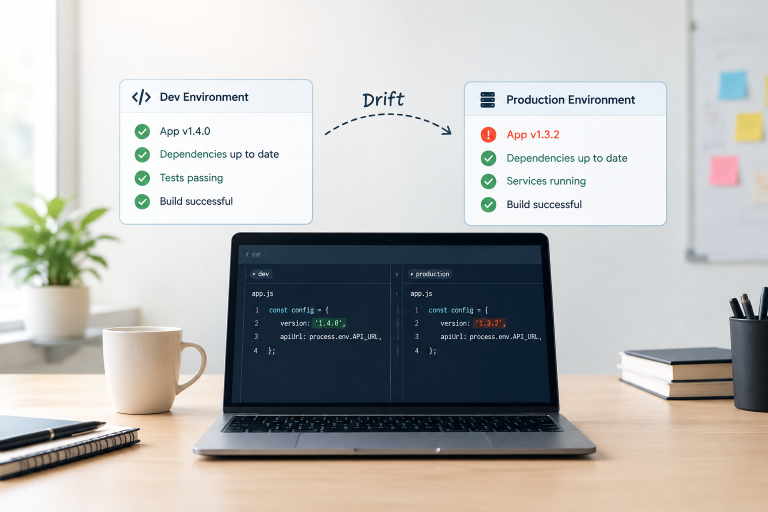
Why Dev and Production Environments Drift
It’s 11:47pm. The deploy that passed every test an hour ago just took production down. Nobody can figure out why, because nothing in staging looked like this. Someone finally says…
Read article →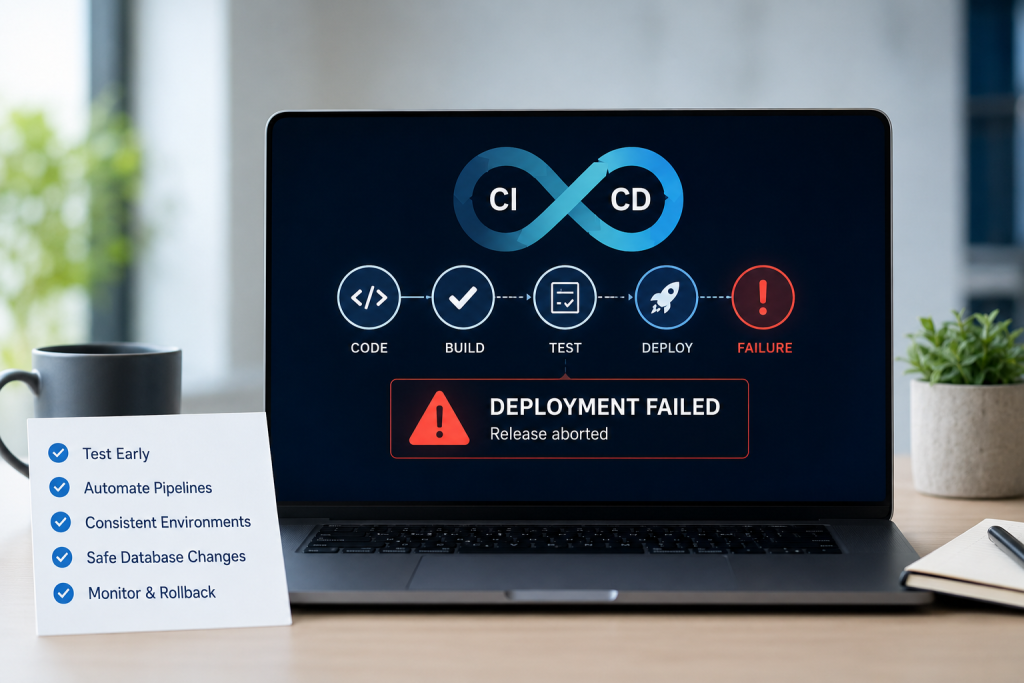
One bad release is all it takes to ruin a normal day at work. The build passes, the deploy goes out, and a few minutes later something breaks. Maybe checkout stops working. Maybe the app crashes. Maybe your support team suddenly can’t keep up with all the complaints coming in. According to Gartner’s downtime cost benchmarks, downtime costs businesses around $5,600 a minute on average, and a lot of companies see a single bad hour cost them more than $300,000. That’s real money, disappearing while you’re still trying to figure out what went wrong.
Deployment failures happen to every team at some point. But most of them come from the same handful of causes, and almost all of those causes can be fixed. Here are five of the most common ones, why they happen, and what actually stops them.
This is the biggest reason behind most deployment failures. Code looks fine when a developer tests it on their own laptop. Then it goes live, meets real users and real data, and something nobody expected goes wrong. This usually happens because the test environment doesn’t really match production, testing gets skipped under a tight deadline, or the team simply doesn’t have enough test coverage to catch the problem early.
How to stop it:
Working with a DevOps as a service provider is one of the easiest ways to fix this for good. They bring in proper testing pipelines and release processes, so bad code simply doesn’t have a way to reach production anymore.
A CI/CD pipeline failure is frustrating because it’s often not even about your app. It’s about the tools and scripts that push your app out breaking behind the scenes. A broken build script, a flaky test, a missing setting, or an outdated dependency can bring the whole release process to a stop, and usually you don’t find out until you’re trying to ship and it just fails.
How to stop it:
We’ve written a full guide on this exact problem, with real examples and fixes. If pipeline issues keep slowing your team down, take a look at our detailed guide to CI/CD pipeline failures.
“It works on my machine” is a line every developer has said at some point, and it usually means one thing: the setup on their computer doesn’t match staging, and staging doesn’t quite match production either. Small differences build up over time, things like different settings, missing environment variables, or software versions that don’t line up, and one day they cause a release to behave completely differently than expected.
How to stop it:
Once your environments are consistent, this kind of failure mostly disappears. It’s a simple fix that saves a lot of stress later.
A database migration going wrong can turn a routine release into hours of downtime. Maybe a schema change locks up an important table. Maybe the migration wasn’t tested with real data volume. Maybe there was no real plan to undo it if something went sideways. Since database changes are often hard to reverse once they run, this is one of the riskiest things a team can get wrong.
How to stop it:
If database updates always feel stressful for your team, that’s usually a sign the process needs a real fix, not another quick patch.
Even good teams ship bad releases sometimes. What matters most is how fast you notice and how fast you can fix it. Teams without a clear rollback plan or live monitoring often don’t find out something’s wrong until customers start complaining, and by then the damage is already done.
How to stop it:
This is where 24/7 IT monitoring services really help. Someone is always watching, which means problems get caught and fixed within minutes instead of hours. Most outages, in fact, involve warning signs that were there all along, they just went unnoticed because nobody was watching closely enough.
These five failures usually aren’t random. They’re signs of gaps in process, testing, or oversight that were bound to show up eventually. Every one of these deployment failures is preventable once testing, environments, database changes, and monitoring are treated as parts of one system, instead of separate boxes to check before a release.
Teams that ship without drama usually have a few things in common. Reliable pipelines, consistent environments, tested rollback plans, and someone keeping an eye on things around the clock. If keeping all of that running feels like more than your team can handle alone, that’s exactly the kind of work an experienced DevOps and IT partner can take off your plate.
Good deployments aren’t about luck. They come down to good process, the right tools, and someone paying attention when things go wrong. Get those right, and bad releases become rare instead of routine.
It’s 11:47pm. The deploy that passed every test an hour ago just took production down. Nobody can figure out why, because nothing in staging looked like this. Someone finally says…
Read article →Nobody joins an engineering team because they love restarting servers at midnight. They join because they want to build things. Yet if you sit in on a few sprint planning…
Read article →The Gap Between “It Works in Staging” and Production Reality There’s a phrase every developer has either said or heard at some point: “But it worked in my local environment.”…
Read article →Tell us where you are and what's slowing you down. A senior engineer will get back to you within one business day.
Our team will get back to you within one business day.

Leave a Reply