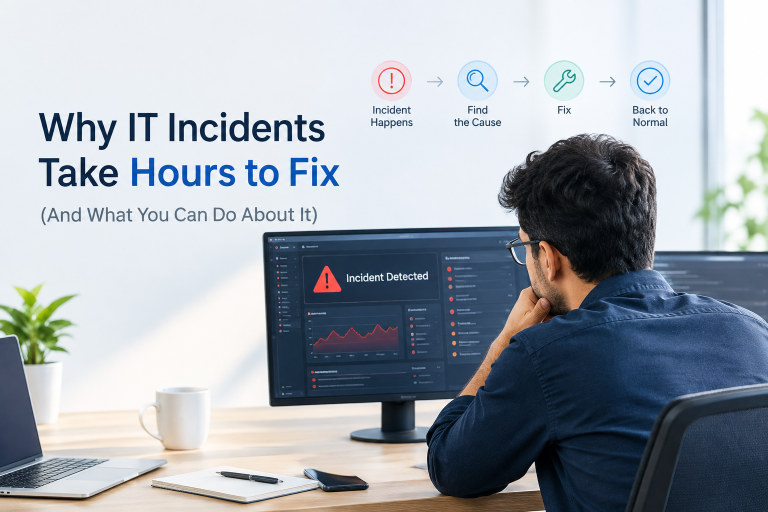
Why IT Incidents Take Hours to Fix
Your system is down right now, or it will be soon. Customers are refreshing a broken page. Someone in sales is asking your team for an update you don’t have.…
Read article →
Backup software plays a critical role in ensuring the safety and continuity of business operations. It is essential for protecting against various threats, including hardware failures, cyber-attacks, and data loss due to user error. By creating and maintaining regular backups, businesses can ensure that their data is safe and can be restored quickly in case of an unexpected event. Deploying standard open-source backup software is a wise decision for any business that values the security and continuity of its operations.
This software is essential for most organizations. Firstly, it offers a cost-effective, customizable, and flexible solution for protecting data and ensuring business continuity. Additionally, it serves as a powerful and trustworthy alternative to proprietary backup software. Consequently, it can benefit individuals, businesses, and organizations of all sizes. Let’s explore the key advantages of open-source backup software.
Cost-effective: Often free or significantly cheaper than proprietary alternatives, open-source software is ideal for individuals, small businesses, and organizations with tight budgets.
Customizable: Organizations can modify and adapt open-source backup software to suit their specific requirements. As a result, users have greater control over the software and can tailor it to their particular use cases.
Flexibility: Open-source backup software is designed to be compatible with multiple hardware and software platforms. So, users can have greater flexibility in choosing the tools and technologies that work best for them.
Transparency: The source codes of open-source backup software are open, and anyone can inspect and audit them. This makes open-source software more transparent and trustworthy—users can verify that the software is secure, free of bugs, and contains no malicious code.
Security: Open-source backup software is often more secure than proprietary backup software, as it is subject to constant review and testing by a large community of developers and users. Any vulnerabilities or weaknesses in the code are quickly identified and addressed.
Reliability: Open-source software is often tested and improved by a community of developers contributing to its development. So, open-source software is constantly evolving and improving.
Data Control: Open-source backup software gives you more control over your data. You can store your backups on your own servers or opt for cloud server providers for data storage.
No vendor lock-in: With open-source backup software, users are not tied to any particular vendor or service provider. They can switch to a different software solution or provider anytime without worrying about data compatibility or migration issues.
Community support: Developers design open-source software to be compatible with multiple hardware and software platforms. So, you can benefit from the knowledge, expertise, and support of a global community of backup professionals.
Choosing an appropriate open-source backup software for your business can lead to cost savings, flexibility, security, support, innovation, and interoperability. It can help you improve your business processes and achieve your business goals. With the help of a reputed IT consulting services provider, you can explore free, open-source software and opt for the right ones according to your business needs.
Your system is down right now, or it will be soon. Customers are refreshing a broken page. Someone in sales is asking your team for an update you don’t have.…
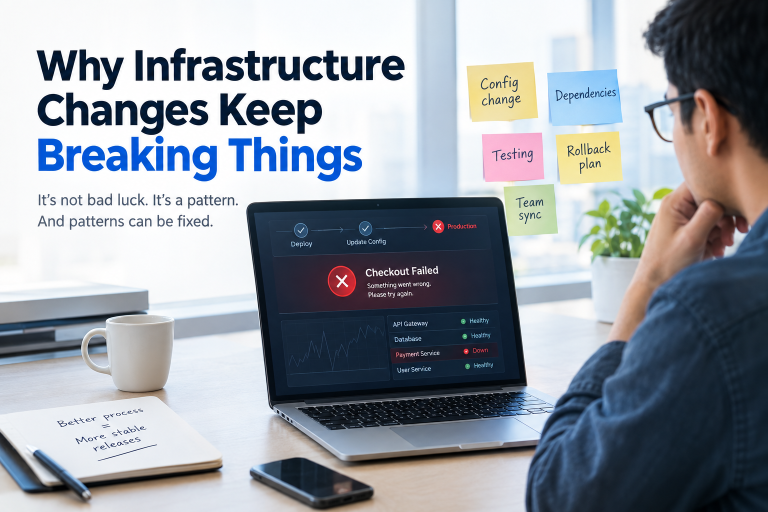
Read article →A deployment goes out on a Thursday afternoon. Nobody expects trouble. Twenty minutes later, checkout fails for half your customers, and three engineers are staring at logs trying to figure…
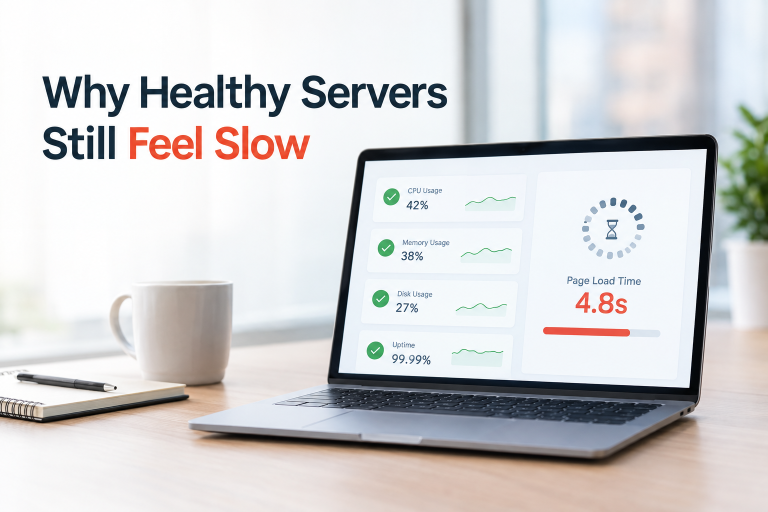
Read article →Support just flagged another wave of complaints about a sluggish checkout. Your team pulls up the dashboard. CPU sits under 50%. Memory looks fine. Uptime reads 99.99%. Every light is…
Read article →Tell us where you are and what's slowing you down. A senior engineer will get back to you within one business day.
Our team will get back to you within one business day.