

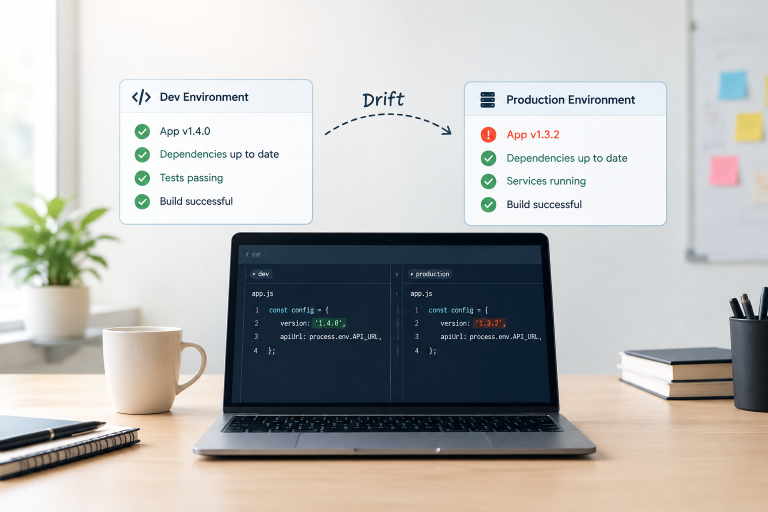
Why Dev and Production Environments Drift
It’s 11:47pm. The deploy that passed every test an hour ago just took production down. Nobody can figure out why, because nothing in staging looked like this. Someone finally says…
Read article →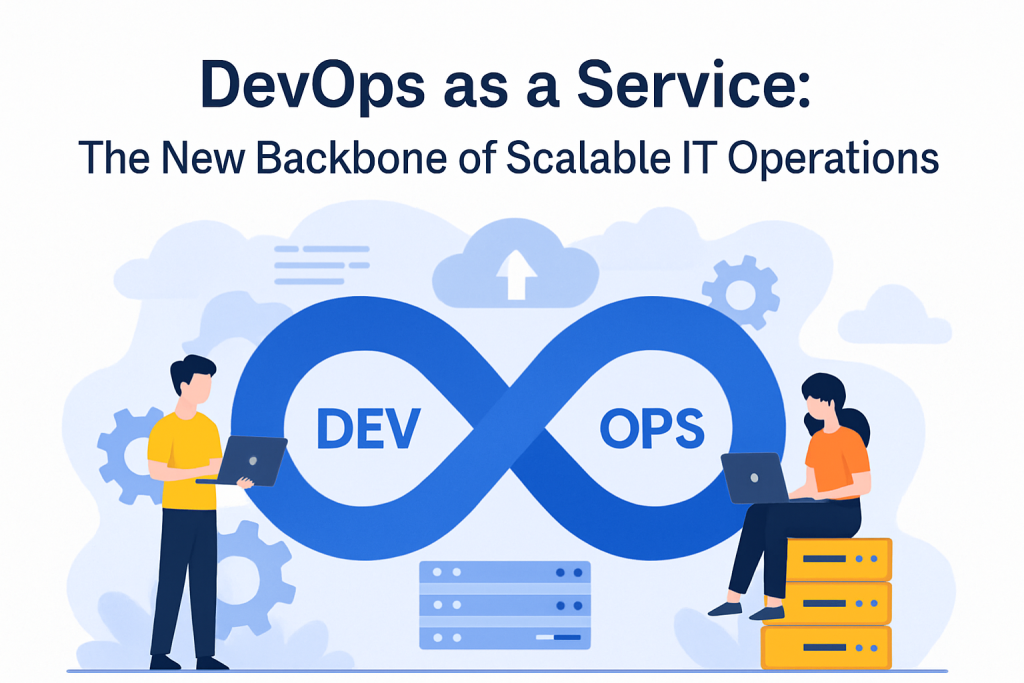
In today’s fast-paced digital world, speed is money. But even the best new ideas can fail if they don’t have stability. DevOps is a method that fills in the gaps between development and operations. But even though a lot of companies know what DevOps is, they still don’t know how to do it. This is where DevOps as a Service (DaaS) comes in. It’s not just a set of tools; it’s a whole new way of doing things that helps modern businesses innovate, grow, and deliver faster with confidence. DaaS has become the new backbone of scalable IT operations, whether you’re a startup trying to get products out the door quickly or a big company moving old systems to microservices.
Let’s explore how DevOps as a Service can future-proof your tech operations—from setting up a CI/CD pipeline as a service to scaling distributed systems with Kubernetes—and why choosing the right partner matters more than ever.
DevOps is no longer just a niche practice; it’s what makes continuous delivery, efficient collaboration, and agile product development possible. But to use DevOps inside your company, you need to have the right skills, be on the same page with your culture, manage your toolchain, and have enough time. That’s a big job for a lot of businesses, especially small and medium-sized ones.
DevOps as a Service makes this complicated situation easier by providing DevOps practices as a managed service. You don’t have to build your DevOps skills from the ground up in-house. Instead, you hire an outside DevOps as a service provider who provides scalable, secure, and automated solutions that meet your business needs.
Think of it as hiring an elite pit crew to keep your car running at peak performance while you focus on winning the race.
Here’s what businesses gain when they adopt DevOps as a Service:
Once the foundation is clear, let’s dig into the technical muscle that makes DevOps as a Service not just efficient but transformational.
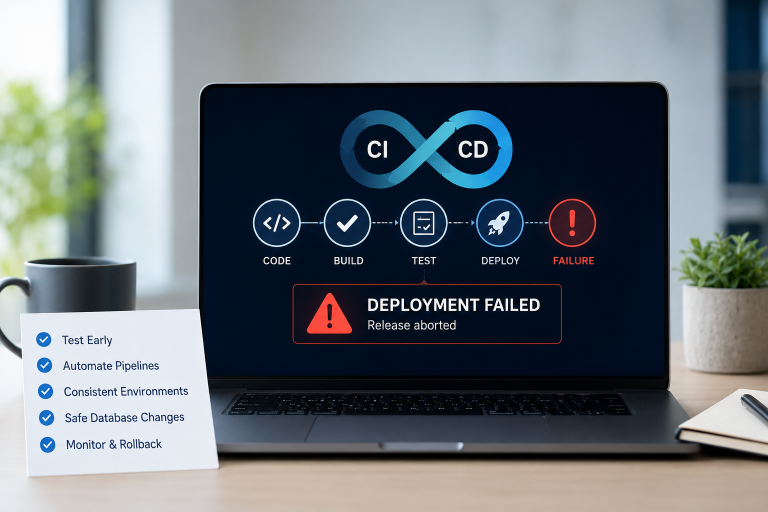
CI/CD (Continuous Integration/Continuous Deployment) is the heart of any DevOps pipeline. In a traditional setup, configuring, monitoring, and managing this pipeline takes time and continuous effort. With CI/CD pipeline as a service, businesses can offload this work to experts who automate the entire process—builds, tests, deployment, rollback—on reliable cloud infrastructure.
Here’s what a robust CI/CD pipeline service provides:
This drastically reduces human error, deployment time, and downtime risk.
Modern applications are increasingly built using microservices—independent components that can be developed and deployed in isolation. DaaS platforms often rely on containers and Kubernetes to manage these services efficiently and ensure smooth operation across distributed environments. This enables:
Teams that use Docker in DevOps can package these microservices into lightweight, portable containers, ensuring consistency across development, testing, and production. Combined with Docker containers, this architecture allows you to ship code in standardized environments—no more “works on my machine” issues.
With tools like Terraform, Ansible, or AWS CloudFormation, infrastructure can be treated like application code—versioned, tested, and repeatable. This is critical for consistency across dev, staging, and production.
A common misconception is that outsourcing DevOps is costly. But let’s break that myth.
Traditional DevOps requires:
When using DevOps consulting services, these functions are bundled into a managed service with flexible pricing. You no longer need to build everything internally or worry about scaling overnight.
Here’s how the cost structure works in your favor:
In short, you convert unpredictable operational costs into predictable service costs while achieving faster outcomes.
All DevOps service providers are not created equal. The right partner does more than just automate pipelines—they align DevOps goals with business goals. They become a part of your delivery team.
Here are key factors to consider:
While tooling is important, successful DevOps transformation is cultural at its core. DaaS providers should encourage a collaborative mindset, foster knowledge sharing, and build accountability across teams.
True DevOps transformation includes:
A mature DevOps as a service provider should work as a catalyst for this cultural shift while taking care of the backend complexity.
Here are some common use cases where DaaS has delivered massive results:
As digital products grow in complexity and user expectations continue to rise, DevOps is no longer optional—it is essential. Rapid deployments, scalable systems, and seamless updates have become the norm, not the exception. However, building a full-scale internal DevOps team is often out of reach for many businesses due to limited time, budget, or in-house expertise.
That’s where DevOps as a service steps in not just as a convenience but as a competitive advantage. By partnering with the right DevOps consulting services, companies can automate workflows, reduce release cycles, and improve software reliability without getting bogged down in operational overhead. From CI/CD pipeline as a service to Kubernetes-powered scalability and real-time monitoring, these solutions offer a clear, managed path to high-performing IT operations.
A trusted DevOps as a service provider brings more than tools, they bring experience. With their help, businesses can scale their infrastructure with confidence, adopt modern practices faster, and focus on delivering value to customers instead of managing backend complexity.
If you want to build software that scales with your vision—not against it—start by choosing a partner who understands your journey, not just your infrastructure.
It’s 11:47pm. The deploy that passed every test an hour ago just took production down. Nobody can figure out why, because nothing in staging looked like this. Someone finally says…
Read article →One bad release is all it takes to ruin a normal day at work. The build passes, the deploy goes out, and a few minutes later something breaks. Maybe checkout…
Read article →Nobody joins an engineering team because they love restarting servers at midnight. They join because they want to build things. Yet if you sit in on a few sprint planning…
Read article →Tell us where you are and what's slowing you down. A senior engineer will get back to you within one business day.
Our team will get back to you within one business day.

Leave a Reply