

Why Cloud Resources Keep Growing
Monday morning, your finance lead sends a message. The cloud bill jumped again, and she wants to know why. You open the console and scroll through hundreds of resources. You…
Read article →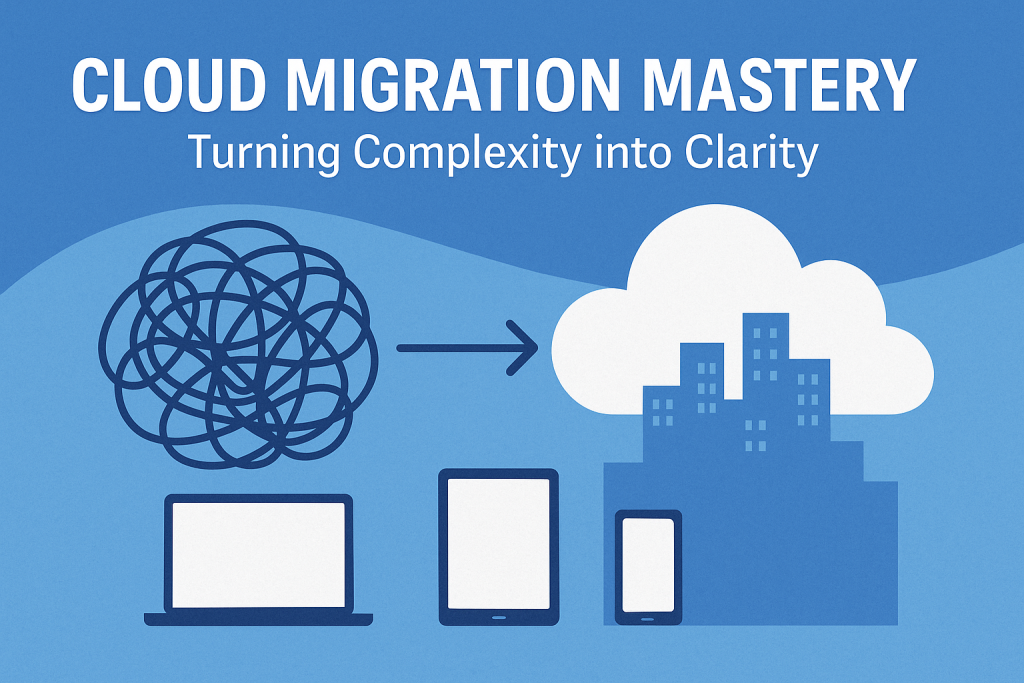
Achieving cloud migration mastery is crucial for digital transformation—it’s the key to unlocking agility, scalability, and innovation. However, the journey toward the cloud is rarely linear or simple. Instead of a seamless shift, most organizations face unexpected complexity, operational disruptions, and architectural chaos.
Even though there is widespread enthusiasm for cloud adoption, enterprises frequently underestimate the effort required to transform legacy systems into modern cloud-native infrastructures. From hidden dependencies and overlooked security implications to misaligned strategies and cultural friction, the challenges are both real and far-reaching.
Fortunately, with the right strategy, governance, tools, and mindset, cloud migration can evolve from a daunting, risk-laden venture into a clear, purposeful re-architecture of the digital backbone. In this guide, we aim to illuminate the common pitfalls as well as the structured pathways to successful cloud transformation.
One of the most frequent missteps in cloud migration is initiating the process with a vague or incomplete strategy. Too often, IT leaders adopt a “just move it” approach, assuming that workloads will inherently perform better in the cloud. As a result, this assumption leads to disjointed migrations that, in turn, result in technical debt, cost overruns, and long-term manageability issues.
Symptoms of Poor Planning:
In essence, treating cloud migration as a simple lift-and-shift project creates more problems than it solves. Without a well-articulated framework, the transformation effort ultimately fails to deliver meaningful business value. Therefore, a strategic, well-planned approach is essential to realizing the full potential of cloud adoption.
In order to transform cloud migration from a tactical project into a strategic re-architecture, enterprises need a foundation built on structure, clarity, and repeatable standards.
Your cloud journey must start with well-defined objectives and architectural principles that align with broader business goals.
Key elements to include:
Governance is not about slowing teams down—it’s about protecting your cloud environment while enabling innovation.
Best practices include:
Manual processes don’t scale in cloud environments where workloads are dynamic and ephemeral. Automation ensures accuracy, compliance, and speed.
Recommended automation strategies:
Helpful Tools:
Decision Framework: The 6 R’s of Cloud Migration
Cloud migration services help organizations transition their applications, data, and workloads to cloud environments in a structured and efficient manner.
Sample Policy as Code:
policy:
name: enforce-migration-tagging
condition:
– resource.type == VM
– tag.environment == null
action:
– block-migration
– notify: cloud.security@company.com
Another major stumbling block, however, is the failure to fully understand how systems interconnect. In reality, applications rarely operate in silos. Instead, they share data sources, network layers, and authentication mechanisms. Consequently, migrating one component without recognizing its ties to another can bring entire services down.
Real-World Consequences:
To ensure a smooth transition, organizations must understand the entire ecosystem and use observability tools to identify both visible and hidden dependencies.
Tools to consider:
These tools can help you identify:
Segment workloads into manageable groups, based on their complexity and dependencies.
Migration Waves:
This approach minimizes risk and allows real-time learnings to influence future phases.
Security and Compliance: Bake It In, Don’t Bolt It On
Security must be foundational—not an afterthought.
Example OPA Policy:
deny[msg] {
input.resource.type == “vm”
input.resource.network.public_ip == true
msg := “VMs with public IPs are not allowed during migration”
}
Tie Security to Visibility
Integrate cloud-native tools and third-party solutions:
Cloud transformation is an organizational shift, not just a technical one. Migration success relies on collaboration across IT, business units, developers, and security teams.
Keys to Operational Cohesion:
Use GameDays—planned failure simulations that mimic real-world disruptions—to identify untested dependencies or misconfigurations.
Cloud migration is a pivotal moment to re-architect systems, moving beyond legacy burdens to embrace adaptive infrastructure, autonomous operations, and programmatic governance. All too often, however, migrations replicate inefficiencies, bottlenecks, and hidden dependencies—transferring outdated patterns into modern platforms without meaningful transformation. In truth, the real value of cloud lies not in where systems run, but in how they are designed to evolve, scale, and respond in real-time to business and threat landscapes.
To fully unlock this potential, organizations must reframe cloud migration as a vehicle for modernization, marked by several foundational shifts:
The path forward is not cloning the data center in the cloud but reimagining it as a software-defined, intelligent fabric. Managed cloud services accelerate this transformation, reducing operational burden while increasing agility.
Start with small pilots, test failure scenarios, and measure business impact. Cloud modernization becomes a cultural shift, transforming how teams think, systems evolve, and trust is built—it’s reinvention.
Monday morning, your finance lead sends a message. The cloud bill jumped again, and she wants to know why. You open the console and scroll through hundreds of resources. You…
Read article →You dread deployment day. You flinch when the cloud invoice lands in your inbox. You’ve stopped trying to explain the architecture to new hires because you’re not fully sure how…
Read article →Your migration was supposed to be finished by now. Instead, you’re staring at a cloud bill that’s twice your budget. An application keeps timing out. Your team is exhausted from…
Read article →Tell us where you are and what's slowing you down. A senior engineer will get back to you within one business day.
Our team will get back to you within one business day.

Leave a Reply