


Why Cloud Resources Keep Growing
Monday morning, your finance lead sends a message. The cloud bill jumped again, and she wants to know why. You open the console and scroll through hundreds of resources. You…
Read article →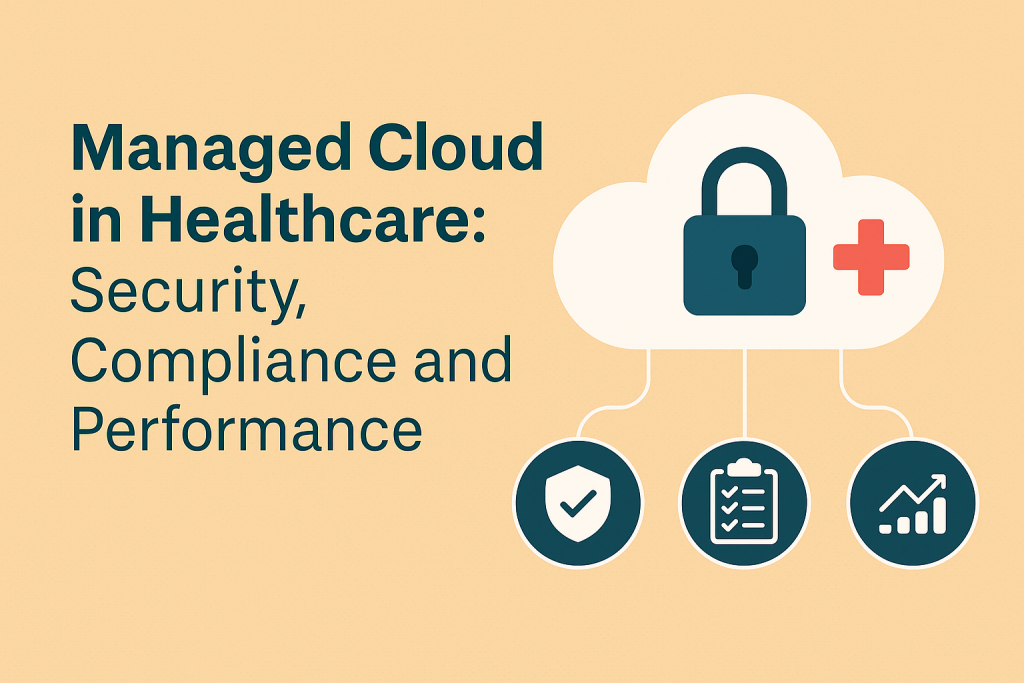
Healthcare is going digital and the cloud is leading the charge. Hospitals and clinics are using it to improve patient care, simplify operations, and access critical data in real time. But let’s be honest: healthcare isn’t like other industries. Between strict regulations, constant cyber threats, and the need for systems that never slow down, adopting new tech can feel overwhelming. That’s why more organizations are turning to managed cloud services. Managed cloud in healthcare is helping hospitals and clinics improve patient care, simplify operations, and access critical data in real time. Instead of struggling with complex infrastructure, they are getting secure, compliant, and high-performance solutions built specifically for healthcare. In this post, we’ll break down how the right cloud partner can help you protect patient data, stay on top of regulations, and keep everything running smoothly, so you can focus on what really matters: your patients.
From electronic health records (EHRs) to medical imaging and telemedicine systems, providers in the healthcare industry are continuously creating an avalanche of data. Maintaining security and compliance while juggling this data is no small challenge.
This is where managed cloud services find application:
It is imperative that rules like HIPAA (Health Insurance Portability and Accountability Act) and GDPR (General Data Protection Regulation) enforce rigorous data security standards as cyber threats grow more common and laws like these are under attack.
A. Growing Risks to Healthcare Cybersecurity
The high value of patient data on the illicit market makes the healthcare industry a prime target for cyberattacks. Typical dangers consist of:
To reduce these risks, a managed cloud provider uses cutting-edge security measures.
B. Key Security Features of Managed Cloud
Security is a top priority in healthcare and managed cloud services are built to protect patient data at every level:
These smart layers of protection help healthcare providers stay secure, compliant, and focused on delivering care.
Compliance in the healthcare sector goes beyond documentation to include safeguarding your patients and your company. Falling short does have actual hazards.
Key Regulations You Need to Know
Healthcare runs on trust—and that means following strict data rules:
How Managed Cloud Simplifies Compliance
Staying compliant should not slow you down. A managed cloud provider takes care of the tough stuff, so you don’t have to:
With the right partner, compliance becomes part of the process—not a burden. You stay focused on care, not checklists.
Performance: When Every Second Counts in Healthcare
In healthcare, technology can’t afford to lag – literally. Consider these real-world scenarios:
These aren’t just IT issues, they directly impact patient care and outcomes.
Modern managed cloud services act like a well-trained medical team for your infrastructure:
Case in Point: When Regional Medical Center moved their telehealth platform to managed cloud:
Telehealth & Remote Monitoring Made Smoother
Today’s cloud platforms make virtual care easier than ever. From wearable device data to secure video calls, everything runs in real time—no lags, no interruptions. With cloud monitoring and management services keeping systems secure and always-on, doctors can focus on care, not tech hiccups.
Smarter Insights with AI & Analytics
Predicting illness or planning treatments with AI takes serious computing power. Managed cloud solutions make it easy to run and scale these tools—while keeping patient data safe and compliant.
Modernizing Electronic Health Records (EHRs)
With cloud migration services, moving EHRs to the cloud brings better mobility, faster searches, and smoother integrations across systems. And with a managed provider handling infrastructure and updates, healthcare teams get the benefits without the backend burden.
Choosing a cloud provider is not just about technology. It is about finding someone who truly understands healthcare’s unique rhythm. Here’s what to prioritize:
The best partners do more than just host your systems. They offer cloud management services that act as an extension of your team, anticipating needs before they become emergencies.
When it comes to choosing your technology partner, healthcare organizations have several strong options:
Each brings unique strengths to the table – the key is finding who aligns best with your specific needs and workflows.
The stethoscope revolutionized how doctors examine patients. EHRs transformed how we track care. Now, managed cloud services are quietly becoming healthcare’s next indispensable tool not because they are flashy, but because they solve real problems.
This is not about “moving to the cloud” for technology’s sake. It’s about:
The most forward-thinking healthcare leaders are not asking if they should adopt cloud technology. They’re determining how to implement it most effectively for their unique needs. Because in an era where every second and every data point counts, your technology should not be a limitation. It should be your greatest ally.
Monday morning, your finance lead sends a message. The cloud bill jumped again, and she wants to know why. You open the console and scroll through hundreds of resources. You…
Read article →You dread deployment day. You flinch when the cloud invoice lands in your inbox. You’ve stopped trying to explain the architecture to new hires because you’re not fully sure how…
Read article →Your migration was supposed to be finished by now. Instead, you’re staring at a cloud bill that’s twice your budget. An application keeps timing out. Your team is exhausted from…
Read article →Tell us where you are and what's slowing you down. A senior engineer will get back to you within one business day.
Our team will get back to you within one business day.

Leave a Reply