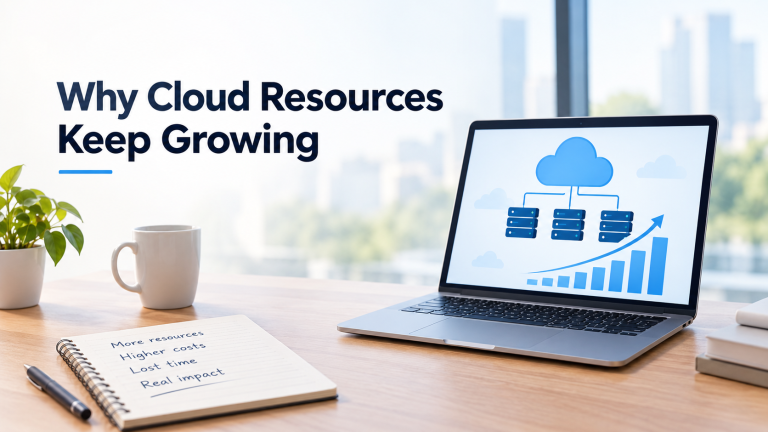
Why Cloud Resources Keep Growing
Monday morning, your finance lead sends a message. The cloud bill jumped again, and she wants to know why. You open the console and scroll through hundreds of resources. You…
Read article →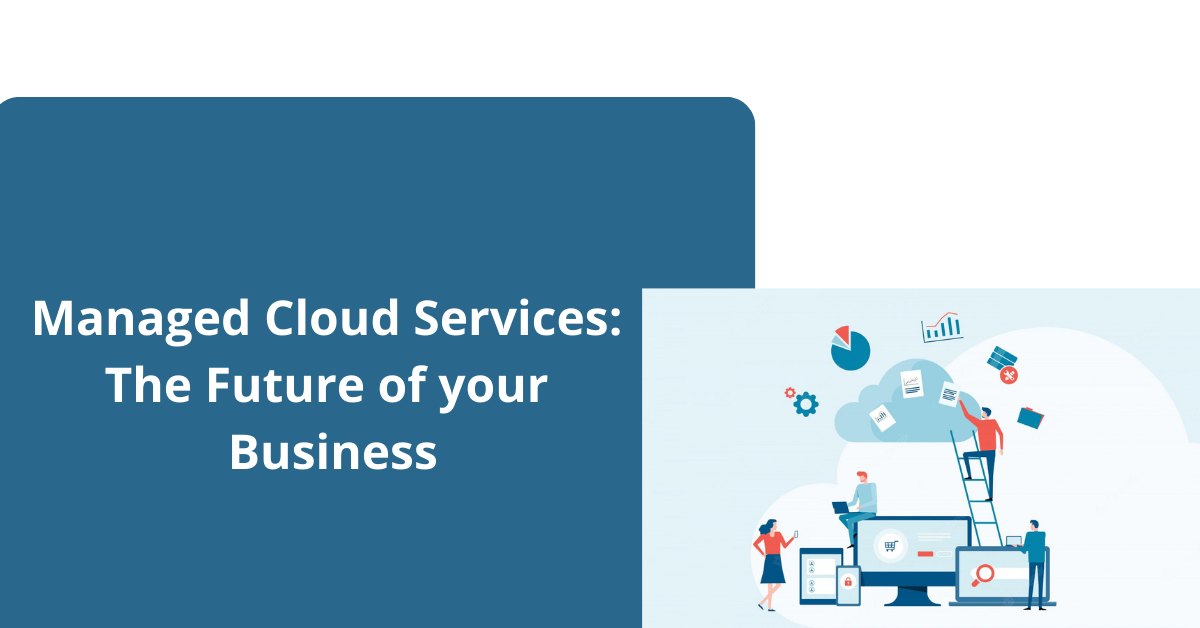
This is an era of technology – every next day, a new technology comes up with promises of betterment, additional facilities, and growth that every business desires. Moreover, cloud usage is gaining popularity for flexible service facilities, scalability, and remote accessibility. Plus, several complex microservices architectures are becoming trendy. Therefore, managed IT services providers, especially cloud service providers (CSP), are keen on offering services that could make implementation easier. They offer cloud managed services so companies can have a smooth and successful cloud migration.
According to a recent survey report, more than 60% of respondents confirmed that they are using managed service providers (MSPs) exclusively or in combination with internal resources to handle their IT jobs. Managed service providers efficiently manage and control their clients’ cloud platforms. An MSP can help you in every deployment stage, including architecture, implementation, and management.
As you recruit a CSP, they are responsible for getting the cloud deployment up and running along with its maintenance. You and your in-house staff don’t have to bother about anything. The right managed IT services partner can provide you with tailored solutions to enjoy the actual transformative value of cloud computing.
Therefore, recruiting managed service providers is essential to improve the utilization of cloud resources. In this approach, your cloud partner closely collaborates with you to understand your exact business goals. Consequently, based on that understanding, they can recommend the right IT infrastructure to support an optimized cloud environment.
You may have doubts about whether managed cloud services are indeed needed? Or it is sufficient to have in-house resources to handle the implementation and development of cloud computing. Here are some of the complications that usually arise when you try to continue a cloud migration without the help of managed services.
Organizations rent access to public cloud infrastructure from different vendors like AWS, Azure, Google, etc. You can manage the initial migration, but as the applications develop, things get complicated. In such a case, your initial infrastructure cost may be lower, but the maintenance costs become too high moving further. To monitor, manage, and run the whole infrastructure, you need to recruit, train, supervise and provision skilled and experienced in-house resources.
You may need to rent infrastructure from various vendors and work with a partner for maintenance and support services. But this will cause accountability issues in the long run.
When you go for a software-as-a-service, the software provider provides you with the infrastructure, support and services upgrade. It is a kind of managed service, as the software provider takes care of all your cloud resources. However, in most cases, the apps are not customized according to your specific needs.
On the other hand, when you go for managed cloud services, you can have flexibility, lower fixed costs, single-point accountability, and always-updated infrastructure.
To you recruit a managed services provider, you can enjoy any or all of the below-mentioned cloud services:
Choose from leading platforms like Amazon Web Services (AWS), Microsoft Azure, Google Cloud Platform (GCP), IBM Cloud, and more for your cloud journey. With the right cloud service provider, you can achieve the best cloud computing solutions, along with other facilities like network, database storage, hosting, backups and so on. But again, working directly with such big houses needs considerable internal IT expertise to manage the whole thing. All these platforms offer several advantages, like global accessibility, efficient security, etc., and that makes organizations choose cloud managed services to access required cloud resources across a remote network through multiple servers. This way, organizations can enjoy the true power of the cloud without hassle. Let’s see how a CSP can help you.
An MSP plays the role of an interface between you and your cloud vendors. In that case, you have to interact with just one partner. It will simplify communication and hybrid environment management.
The trained and up-to-date experts of your managed service partner will help to streamline the job and roles of your internal IT team.
An MSP provides your continuous guidance in every aspect, from strategy planning to execution to the upgradation of regular tech and software.
As your managed service partner takes care of maintenance and management of online platforms, your internal team gets more time to focus on productive tasks and business growth along with training and upskilling. In this way, your organization’s productivity will increase. In addition, cloud computing provides you with the agility and flexibility to meet new changes.
A managed service partner recommends flexible solutions based on realistic and requirement-based strategies.
As you can get the services of an MSP at a fixed cost, it becomes easier to plan your monthly expenditure and budgeting.
An MSP provides customized cloud solutions offering scalability and agility with a pay-as-you-go service model.
A managed service provider conducts constant infrastructure monitoring and improves security configurations and processes. They also assist you with every relevant compliance and security feature, data safety, backup policies, and recovery plans for business continuity. They are also committed to following service level agreements (SLAs) for service continuity. Be it around-the-clock support service or infrastructure updates, everything is conducted per SLAs.
Additionally, working with managed cloud services is an efficient way to outsource every essential service related to cloud computing. Based on your business objectives, your managed services partner can therefore provide you with technology that helps create the right balance between public cloud facilities and on-prem reliability.
According to current trends, it is clear that the future of cloud computing lies in a hybrid environment supported by managed cloud services. Moreover, an MSP offers scalability along with cost-efficient service facilities. Consequently, with your cloud service provider, you can simplify and streamline the management of IT infrastructure, applications, and processes.
Monday morning, your finance lead sends a message. The cloud bill jumped again, and she wants to know why. You open the console and scroll through hundreds of resources. You…
Read article →You dread deployment day. You flinch when the cloud invoice lands in your inbox. You’ve stopped trying to explain the architecture to new hires because you’re not fully sure how…
Read article →Your migration was supposed to be finished by now. Instead, you’re staring at a cloud bill that’s twice your budget. An application keeps timing out. Your team is exhausted from…
Read article →Tell us where you are and what's slowing you down. A senior engineer will get back to you within one business day.
Our team will get back to you within one business day.