

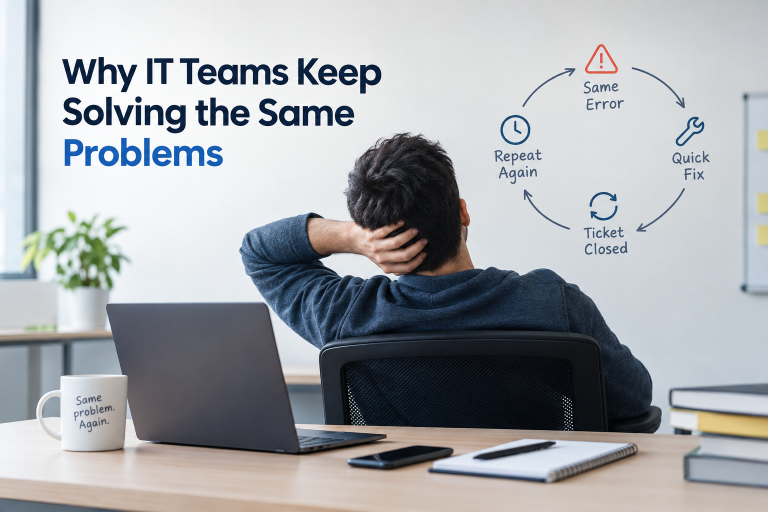
Why IT Teams Keep Solving the Same Problems
You close a ticket, feel a small sense of relief, and move on with your day. Then, three months later, the same issue shows up again, almost word for word.…
Read article →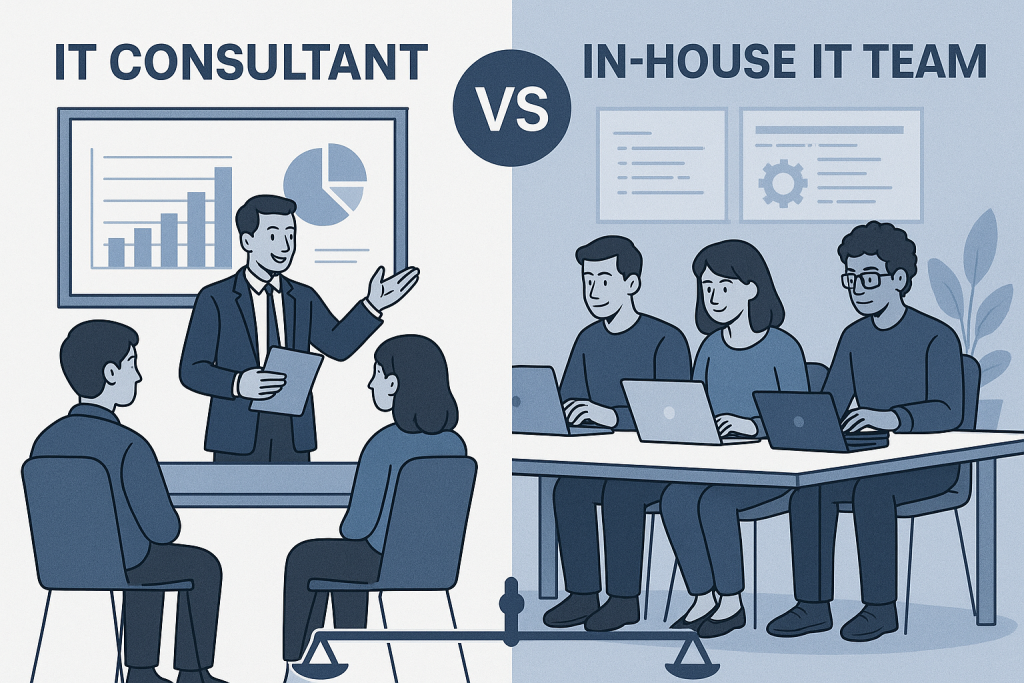
These days, technology plays a role in almost every part of how businesses operate and grow. Whether it is keeping customer data safe or helping teams collaborate seamlessly, it’s hard to imagine running a business without it. As a result, as your company grows, the question inevitably arises: Should we bring in an IT consultant or build our own in-house IT team?
On one hand, each path has its benefits. However, the right choice depends on a few key factors—your company’s size, budget, goals, and specific needs. In this post, we’ll explore when each option works best—and more importantly, why using both might be the smartest move for your business.
IT Consultant: Imagine you’re facing a specific tech challenge—**maybe it’s migrating to the cloud or completely overhauling your IT infrastructure. In such cases, that’s where an IT consultant comes in. These experts typically work on short-term projects, offering specialized skills and a fresh perspective. Whether you need to upgrade your systems or handle complex strategic shifts, their deep knowledge allows them to tackle the job efficiently and accurately. For this reason, many businesses turn to IT consulting services to navigate critical technology changes and achieve long-term goals.
In-House IT Team: Now, let’s talk about your internal team. These are the people who are embedded in your business. Unlike external consultants, they’re full-time employees who know your systems inside out. So, when something breaks, they’re there to fix it, and when it comes time to make long-term tech plans, they’re already in the loop. From handling daily troubleshooting to ensuring your cybersecurity is tight, an in-house IT team provides constant, reliable support tailored to your specific needs.
1. You’re taking on a complex project
If you’re tackling something big—like a cloud migration or a full system upgrade— IT consultants bring the know-how to get it done right, without the guesswork.
2. You don’t have the skills in-house
Need help with something your current team isn’t trained for? An IT consultant can quickly fill that gap with up-to-date expertise.
3. You’re keeping costs low
Hiring full-time staff is expensive. For short-term needs, a consultant is often the more budget-friendly option.
4. You need results fast
Pressed for time? Consultants are ready to dive in and deliver, without the ramp-up period of a new hire.
5. You want an outside opinion
Sometimes, it helps to get a fresh perspective. IT consultants bring experience from other industries and can spot things your team might overlook.
1. You need someone on hand every day
If tech issues pop up regularly, having an internal team ensures nothing falls through the cracks.
2. Your business relies on custom solutions
n-house teams understand your operations inside out. They can build tools and systems that truly fit your workflow.
3. You deal with sensitive information
Industries like healthcare and finance have strict data rules. Having your own IT team gives you more control over compliance.
4. You’re thinking long-term
If IT plays a big role in your growth plans, it helps to have a team that’s in it for the long haul and aligned with your vision.
5. Culture matters to you
Your team knows your values and works closely with other departments. That connection can make collaboration smoother and more effective.
| Aspect | IT Consultant | In-House IT Team |
| Cost Model | Hourly or project-based | Salaries + benefits |
| Initial Investment | Low (short-term) | High (hiring + infrastructure) |
| Flexibility | High | Moderate |
| Long-Term Cost | High (for continuous work) | Cost-effective for ongoing support |
| Specialized Skills | Easy to access | Harder to hire for niche roles |
| Speed | Fast execution | Moderate (depends on hiring speed) |
Many companies are finding that a mix of in-house and outsourced IT support works best.
For example, your internal team might handle the day-to-day—things like help desk tickets, software updates, and managing devices. When it comes to the bigger stuff—like moving to the cloud or tightening your cybersecurity—you bring in a consultant with the right experience. The benefits of hiring IT consultants include getting specialized expertise for complex projects without the overhead of full-time hires.
This blended model gives you flexibility without stretching your budget, and it keeps you ready for whatever tech challenges come your way
Before deciding, it helps to slow down and think through a few things:
Your answers will give you a clearer sense of whether you should build in-house, bring in outside help, or maybe use both.
Startup on a Tight Timeline
A small startup needed to launch fast but had zero internal IT structure. They brought in a consultant to design their network and cloud setup from scratch. Once things were stable, they hired a junior IT person to maintain it day to day.
Mid-Sized Manufacturer Boosting Cybersecurity
A manufacturing company had a decent in-house IT team but lacked deep cybersecurity skills. Rather than overloading their staff, they hired IT consultants to perform a security audit and implement stronger defenses. Their internal team now handles ongoing maintenance.
Enterprise with Strategic IT Goals
A large enterprise with an established IT department was planning a major infrastructure overhaul to support rapid growth. Rather than relying solely on their internal team, they partnered with IT infrastructure consulting services to design a scalable system and ensure seamless integration across departments. This allowed them to focus on their core business while experts handled the complex technical aspects.
If you’re planning to grow internationally, a consultant can be a big asset. They often come with knowledge of regional IT regulations, infrastructure setups, and compliance requirements that your in-house team may not be familiar with. That kind of insight can save time and money when entering new markets.
Consultants offer quick fixes, but in-house teams build deep knowledge of your systems over time—making them invaluable in the long run.
Investing in your internal team’s growth and career path helps retain top talent, leading to more stability and better results.
Clearly, choosing between an IT consultant and an in-house IT team is not a simple decision. Instead, it is a strategic choice that should support your vision and where your company is headed.
In many cases, the smartest move is combining both approaches. For example, bring in consulting pros for big initiatives, while counting on your internal team for everyday excellence. Ultimately, the best IT strategy is the one that grows with your business and helps you move forward with confidence.
You close a ticket, feel a small sense of relief, and move on with your day. Then, three months later, the same issue shows up again, almost word for word.…
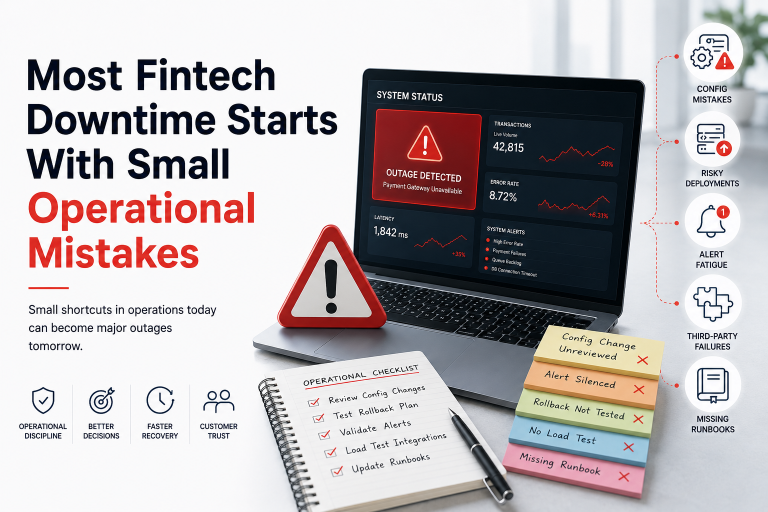
Read article →There’s a familiar pattern that often unfolds quietly within fintech engineering teams, usually just before things take a turn for the worse. A configuration file gets updated without anyone taking…
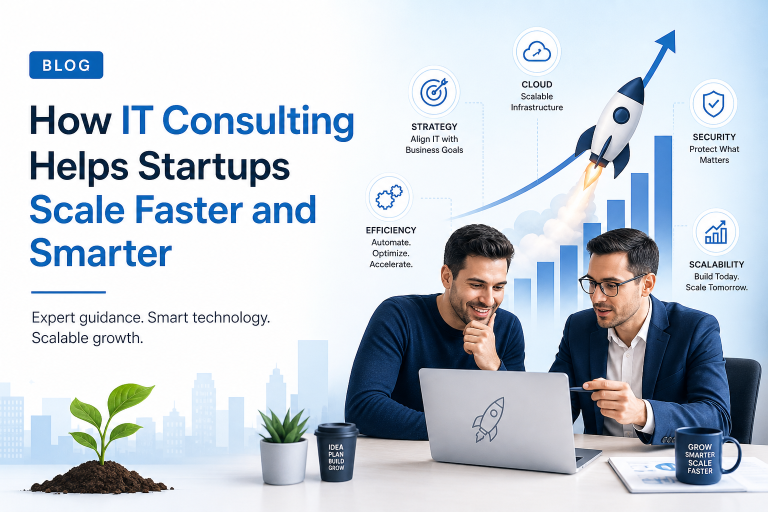
Read article →In a startup, rapidity is a tactical benefit and a potential threat. The capability to act swiftly allows for market entry, fast iteration, and the acquisition of initial customers. Nonetheless,…
Read article →Tell us where you are and what's slowing you down. A senior engineer will get back to you within one business day.
Our team will get back to you within one business day.
Leave a Reply