
You close a ticket, feel a small sense of relief, and move on with your day. Then, three months later, the same issue shows up again, almost word for word.
If that sounds familiar, you already know why IT teams keep solving the same problems. It’s not bad luck. Instead, it’s a broken pattern, and it’s draining your team, your budget, and your patience one repeat incident at a time. So this post breaks down exactly why it keeps happening, what it’s really costing you, and how to finally stop it for good.
The Cycle You Can’t Seem to Escape
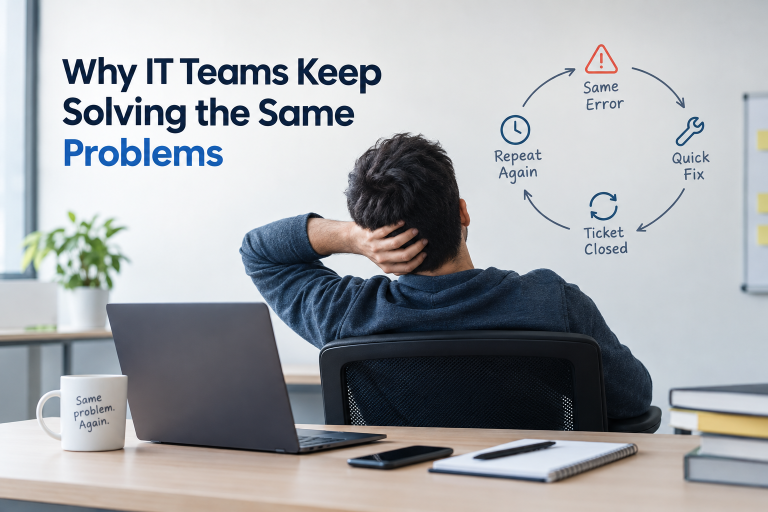
First, pull up your last five major incidents. Then compare them to the five before that. Chances are, you’ll see the same names again and again. For example, outages, slow applications, failed deployments, backups that silently stopped working, and security gaps that got “patched” but never actually closed.
This is often called the firefighting trap, and it’s exhausting. Because your team responds to symptoms, nobody has time to chase causes. A server crashes, someone restarts it, the ticket closes, and everyone moves on. As a result, nobody asks why it crashed. Nobody has the bandwidth to dig into whether it’s a capacity issue, a configuration problem, or something rotten in the architecture.
Every skipped root cause becomes a debt. That debt doesn’t disappear. Instead, it waits, then resurfaces at the worst possible moment. This is precisely why IT teams keep solving the same problems while feeling like they’re never actually getting ahead.
What This Cycle Is Really Costing You
This isn’t just annoying. In fact, it’s expensive, and it’s hurting your business in ways that don’t always show up on a dashboard.
- You lose real productivity every time employees can’t reach a system they need
- You spend more on emergency fixes than you would on planned, permanent solutions
- You carry security risk from patches applied halfway or inconsistently
- You slow down innovation because your best engineers are stuck on maintenance
- You burn out your team, who feel like they’re always reacting and never building
Overall, this adds up fast over a year. So this is exactly why IT teams keep solving the same problems without ever delivering the stability leadership actually wants. Nobody fixes the system. Instead, they just keep patching its symptoms.
Why This Keeps Happening
Your Team Is Built to React, Not Prevent
Most internal IT setups run on a ticket model. Something breaks, someone responds, and the fire gets put out. As a result, that structure leaves zero room for proactive monitoring or real architecture reviews, the exact things that stop problems from coming back.
Knowledge Walks Out the Door
The one engineer who truly understood that legacy system just left the company. Consequently, their knowledge left with them. Now someone else has to rediscover the same problem from scratch, and they might fix it in a way that breaks something else.
Your Tools Don’t Talk to Each Other
Over the years, many organizations add new monitoring tools and dashboards without a clear plan. As a result, teams end up with fragmented visibility. A slowdown in one system and a memory leak in another might share one root cause. However, nobody connects the dots because nobody sees the whole picture.
Manual Work Keeps Breaking Under Pressure
Manual deployments and manual patching invite mistakes, even from your best people. Automation would fix this. However, your team barely has time to keep the lights on, let alone build it.
Your Team Is Stretched Too Thin
Help desk tickets, infrastructure upgrades, and compliance work all compete for the same limited hours. As a result, there’s simply no time left for the permanent fixes that would actually end the cycle.
How to Actually Break the Cycle
You don’t need more effort from your team. Instead, you need a different structure. Here’s what works.
Stop Waiting for Things to Break
Proactive, continuous monitoring catches problems while they’re still small. For instance, 24/7 IT monitoring services flag a resource spike, an unusual login, or a failing backup before it becomes an outage. As a result, you stop reacting and start preventing.
Automate the Repetitive Work That Keeps Failing
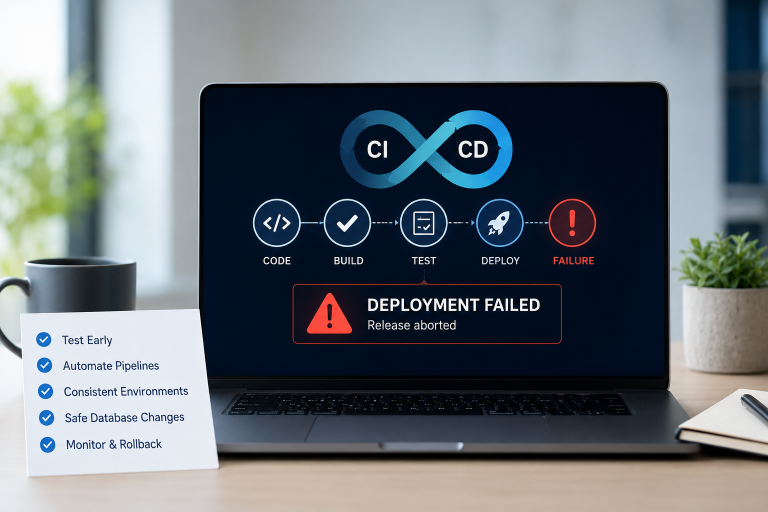
Manual, repetitive tasks are where recurring mistakes live. So DevOps consulting services replace ad hoc manual work with repeatable, automated pipelines built on infrastructure as code. Consequently, fewer manual steps means fewer repeat failures.
Actually Investigate Root Causes
Every recurring issue deserves a real post mortem, not a quick fix and a closed ticket. Therefore, ask why it happened, then fix the structural issue behind it. This takes dedicated time, but it’s worth every minute.
Bring Your Visibility Into One Place
Scattered tools hide patterns. However, centralized monitoring and unified dashboards let your team see connections across systems instead of staring at isolated alerts.
Get Help When You’re Stretched Too Thin
Sometimes your team just doesn’t have the hours or specialized skill to fix things permanently, and that’s not a failure. It’s simply reality. In that case, managed IT services give you dedicated specialists and mature processes without the cost of building an entire department from scratch. A good partner doesn’t just close tickets faster. Instead, they bring the discipline to end the repeat incidents for good.
The Cost of Waiting Keeps Climbing
Cloud infrastructure, remote teams, and always on services have raised the stakes. As a result, a glitch that was a minor annoyance five years ago can now knock out customer access in minutes and hit your revenue and reputation at the same time.
This is why IT teams keep solving the same problems while falling further behind every quarter. In short, reactive support simply can’t keep pace with how fast systems change today. Standing still isn’t safe. In fact, it’s a slow way of losing ground.
Therefore, the businesses that break free invest upfront in prevention. This means better monitoring, better automation, better documentation, and outside help where it makes sense. As a result, the question shifts from “how do we fix this ticket” to “how do we make sure this never happens again.”
Stop Treating the Symptoms
Recurring IT problems don’t mean your team is weak. Instead, they mean your system rewards firefighting over prevention, and that’s a fixable problem. Understanding why IT teams keep solving the same problems is therefore the first step toward finally ending the cycle.
So automate what keeps breaking. Monitor before things fail. Also, bring in help where your team is stretched thin. Do that, and you stop firefighting and start building. As a result, your team gets its time back, your business gets real stability, and you get to stop dreading the next repeat incident.