

The “We’re Stuck” Moment: How to Know When DevOps as a Service Isn’t Optional Anymore.
Let’s be honest about something right up front.
Most of the noise you hear about DevOps makes it sound like a magical incantation. You chant “CI/CD” three times, spin around in your chair, and suddenly your software deploys itself while you sip coffee.
That’s the fantasy.
The reality is a lot grittier. The reality is looking at a Slack channel full of panic messages at 11:47 PM because a deployment went sideways. The reality is staring at an AWS bill that looks like a phone number instead of a utility cost.
The question isn’t “What is DevOps?” The question is “When do you actually need DevOps as a Service?”
I want to walk you through that exact moment of recognition. Not the textbook definition, but the gut-punch feeling in your stomach when you realize the way you’re building software is actually the thing holding your business back.
The Kitchen Analogy (Stick With Me Here)
Imagine you run a small, successful restaurant. In the beginning, you were the chef, the cashier, and the dishwasher. You had one menu and five customers a night. It worked.
Now, you’ve got 500 customers a night, a menu that changes weekly, and four new cooks who don’t know where you keep the salt. You’re still washing dishes by hand while trying to invent the next special.
This is exactly what happens in software teams before they adopt DevOps as a Service (DaaS).
In the simplest layman terms possible: DevOps as a Service is like hiring a professional kitchen manager and a high-end dishwasher ‘combined’. They don’t cook the food (that’s your developers writing code), but they make sure the stove is always hot, the ingredients are fresh and in the right place, and the plates go out clean and fast.
It typically includes things like CI/CD pipelines (the conveyor belt that moves the food from the grill to the table without you tripping over it), infrastructure automation (the buttons that turn on all the ovens at the exact right temperature instantly), and cloud cost optimization (making sure you aren’t paying to keep the patio heaters on in July).
But let’s get specific. How do you know if ‘you’ are the one hand-washing the dishes while your restaurant is on fire?
1. The Friday Afternoon Freeze: When Releases Become Hostage Situations
The Situation You Recognize:
It’s 3:00 PM on a Friday. The team has been ready to ship that new feature since Wednesday. But you can’t push the button. Why? Because “Steve” is the only person who knows the arcane sequence of commands to deploy to production, and Steve is at his kid’s soccer game. Or worse, you ‘did’ deploy last week without Steve, and you spent Saturday morning restoring the database from a backup because of a typo in a config file.
The Simple Logic:
If pushing a new feature live feels like defusing a bomb, you’re operating in the dark ages. Manual deployments are like trying to bake a perfect soufflé 100 times in a row without a recipe. Eventually, you’re going to forget the baking powder and the whole thing collapses.
A Bit of Tech:
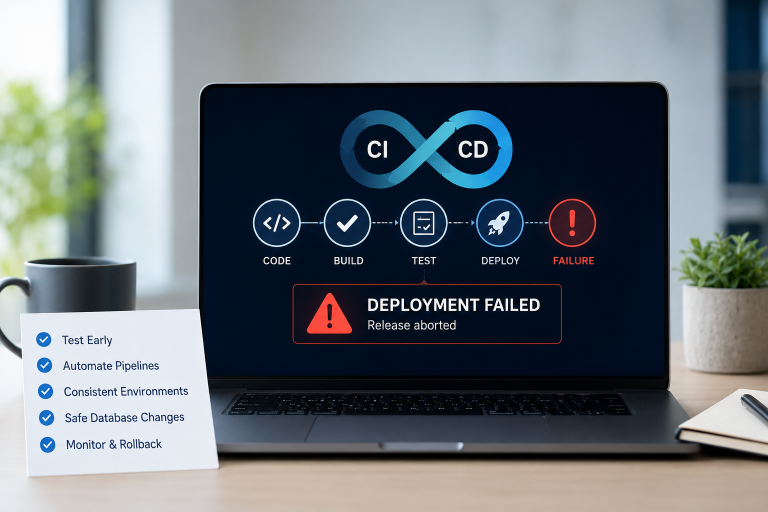
Without a CI/CD pipeline, your code lacks automated tests that say, “Hey dummy, you broke the login page.” A pipeline just runs through a checklist of 100 sanity checks in 30 seconds that would take a human two hours to do (and they’d get bored and miss number 78).
Why DevOps as a Service Fixes This:
It removes “Steve’s Laptop” from the equation. The process becomes a machine. You tag the code, the machine builds it, tests it, and puts it on the server. Friday becomes just another day.
2. The Phantom Bill: Why Cloud Costs Keep Haunting Your P&L Statement
The Situation You Recognize:
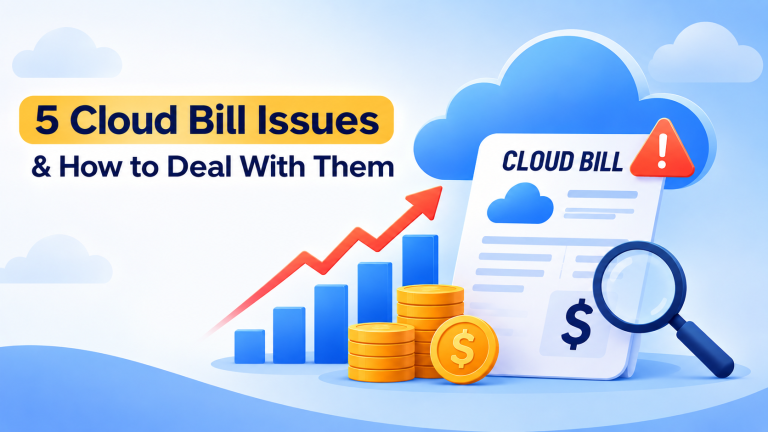
Your CFO messages you with a screenshot of the cloud bill. There’s no text, just the image. You zoom in and feel a cold sweat. The number is 40% higher than last month, and you have no idea why. You check the dashboard. Everything looks “green.” You shrug and mumble something about “increased user traffic.”
The Simple Logic:
This is like leaving every single light, fan, and TV on in your house 24/7, even when you’re on vacation, and then being shocked when the electric bill arrives. You’re probably paying for “over-provisioned resources”—servers that are big enough to handle Amazon on Black Friday, but you’re just running a niche blog.
A Bit of Tech:
In the cloud, you spin up virtual machines (like an EC2 instance). If you set it to “XL” size and forget it, it burns cash every second it’s on. Or maybe you spun up a test database six months ago and forgot to delete it. That’s idle infrastructure.
DevOps consulting services usually start here. They run a cost audit. They set up auto-scaling policies that say: “If nobody visits the site at 3:00 AM, shut down 80% of the servers. When everyone wakes up at 8:00 AM, spin them back up.” It’s like having a very strict, energy-conscious roommate who turns off the lights when you leave the room.
3. The Hug of Death: When Success Breaks Your App
The Situation You Recognize:
Marketing just did a killer TikTok video. Suddenly, 50,000 people are trying to log into your app simultaneously. Your phone buzzes. Notifications: ‘Service Unavailable. 503 Error. Timeout.’ Instead of celebrating, you’re praying for the traffic to stop so the server can breathe.
Logic (Layman Terms):
This is the digital equivalent of having a tiny doorway for a store that just got swarmed by a flash mob. People are pushing and shoving, and nobody can get in to buy anything. Scaling manually is sending a guy with a hammer to widen the doorway while the crowd is already there—too slow.
A Bit of Tech:
Infrastructure automation (specifically tools like Terraform or Kubernetes) allows you to define rules like, “If CPU usage hits 70%, create two more exact copies of this server right now.” The system expands the doorway before the crowd suffocates.
Why DevOps as a Service Fixes This:
It’s the difference between bailing water with a bucket and having an automatic bilge pump. You don’t even notice the storm; the system just handles it.
4. The Compliance Headache (The Dealbreaker)
The Situation You Recognize:
You’re about to sign a huge enterprise contract. You’re popping champagne. Then the email arrives from their security team. Subject: ‘SOC2 Type II and Penetration Test Results Required.’ You look at your dev who manages the servers. They look back at you with the fear of a deer in headlights.
Big companies don’t trust your word; they trust paperwork and automated scans. They want to know if you change a piece of code, does a security scanner look at it immediately? Or do you just check for holes in the fence once a year?
A Bit of Tech:
This is “Shift Left Security” Instead of doing a security audit right before launch (and delaying launch by a month), security integration tools like Snyk or Trivy run every time code is changed. They yell at the developer, “Hey, this open-source library you used has a known vulnerability. Pick a different one.”
A good DevOps as a service provider understands the compliance landscape. They build pipelines that log everything, encrypt data by default, and produce the audit reports those enterprise clients demand before they ask.
5. The “Purple Squirrel” Hunt: You Can’t Hire Your Way Out of This
The Situation You Recognize:
You posted a job for a “Senior DevOps Engineer.” The candidate pool is either people who just watched a YouTube tutorial last week, or people with 10 years of experience who want a salary equal to your entire engineering budget. You’re stuck. You know you need the function, but you can’t afford the person.
For example:
This is the classic DevOps expertise gap. You need a Ferrari mechanic, but you can only afford a Honda Civic mechanic. And even if you hired the Ferrari mechanic, you only need them for 10 hours a week of specialized tuning.
You buy the outcome, the tuned engine- not the full-time salary of the mechanic. Choosing the right DevOps as a service provider here is key because their experience becomes your team’s temporary superpower. They’ve seen the potholes on the road ahead and know how to steer around them.
The “Not Yet” Zone (When You Should Hold Your Horses)
I’d be doing you a disservice if I didn’t mention the flip side. Adding a complex DevOps pipeline to a team of two people working on a simple prototype is like using a flamethrower to light a candle. It’s overkill.
– You’re a true 0-to-1 startup: If you haven’t found product-market fit, just ship code. Break things. Fix them manually.
– You deploy once a month: If the manual process takes 20 minutes and works fine, don’t spend 2 weeks automating those 20 minutes.
– You have a rockstar in-house: If you already have a person managing this smoothly, treat them well. You don’t need a service; you need a retention bonus for them.
The Danger Zone: What Happens If You Wait Too Long?
I’ve seen this play out a hundred times. Companies know they have a problem but they keep kicking the can down the road because “we have features to ship.” But the longer you wait, the heavier the anchor becomes.
– Speed Bleed: Competitors who can deploy 10 times a day will eat your lunch. They’ll fix bugs and add features while you’re still waiting for Steve to get back from soccer practice.
– The Burnout Bomb: Your best developers will leave. They didn’t sign up to be overworked system admins. They signed up to build.
– Customer Trust Decay: Every minute your app is down is a minute your customer thinks about switching to the other guy.
The Cheat Sheet: Should You Pull the Trigger?
Forget the complex flowcharts. Here’s the napkin test.
1. Are manual deployments making you dread Fridays? YES/NO
2. Are your cloud costs a mystery that only gets solved after the bill arrives? YES/NO
3. Is scaling a manual, panic-driven event rather than an automatic non-event? YES/NO
If you circled YES to any of these, it’s not a matter of if you need DevOps, it’s a matter of how soon you can get it.
Conclusion
Ultimately, DevOps as a Service isn’t about the cool dashboards or the fancy tech jargon. It’s about removing the friction that makes building software feel like running through wet cement.
You feel the need for it not when you read a blog post (even this one), but when the excitement of growth is replaced by the anxiety of managing chaos. When your team is working harder but moving slower. That’s the signal.
That’s when you stop worrying about the cost of adopting DevOps and start worrying about the cost of *not* adopting it.