
Cloud computing has quietly become the backbone of how modern businesses operate — and for good reason. If you are running a small business, building a SaaS product, or managing an ecommerce store, the decision to move your operations to the cloud is one of the most consequential infrastructure choices you will make.
The benefits of cloud computing go well beyond simple cost savings. They touch how you scale, how secure your data is, how quickly your team can work, and how well you can compete with businesses ten times your size. This guide breaks down every major advantage so you can make an informed decision about whether cloud technology fits your situation.
What Is Cloud Computing?
Cloud computing refers to the delivery of computing services — servers, storage, databases, networking, software, and analytics — over the internet rather than through physical hardware you own and manage on-site. Instead of buying a server and housing it in your office, you access those resources remotely through a provider's infrastructure, paying for what you use.
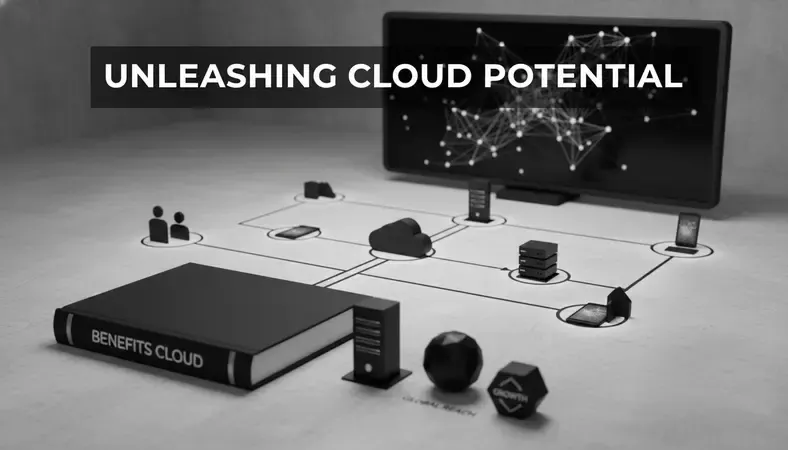
The three main service models you will encounter are:
- Infrastructure as a Service (IaaS): You rent raw computing power, storage, and networking. Think of it as leasing a virtual data center.
- Platform as a Service (PaaS): You get a managed environment to build and deploy applications without worrying about the underlying infrastructure.
- Software as a Service (SaaS): You access fully built applications through a browser — email platforms, CRM tools, and project management software all fit here.
Understanding these distinctions matters because the benefits of cloud computing differ depending on which model you adopt. A SaaS product company building on PaaS experiences different advantages than a small business running its accounting software through a SaaS application.
Key Insight: According to Gartner's cloud market research, worldwide public cloud spending is projected to reach nearly $600 billion — a figure that reflects how decisively businesses across every sector have embraced cloud infrastructure.
Key Benefits of Cloud Computing
The benefits of cloud computing are not abstract. Each one maps directly to a real operational problem that businesses face every day. Here is a structured look at the core advantages:
Comparison of Cloud Computing Benefits by Business Type
| Benefit | Small Business | SaaS Companies | Ecommerce |
|---|---|---|---|
| Cost savings | Eliminate hardware purchases | Reduce infrastructure overhead | Lower server maintenance costs |
| Scalability | Grow without IT hires | Handle user growth automatically | Scale during traffic spikes |
| Security | Enterprise-grade protection | Compliance support built in | PCI-DSS ready environments |
| Reliability | 99.9%+ uptime SLAs | Redundant systems across regions | No downtime during sales events |
| Collaboration | Remote team access | Distributed developer teams | Multi-location inventory management |
Each of these benefits deserves a deeper look, because the specifics are what determine whether cloud technology actually solves your problem.
Cost Savings and ROI
The financial case for cloud computing is often the first thing businesses examine — and the numbers tend to be compelling once you look past the surface.
On-premise infrastructure requires significant upfront capital. You purchase servers, storage hardware, networking equipment, and cooling systems. You hire IT staff to maintain them. You replace aging equipment every three to five years. You pay for physical space, power, and insurance. These costs are fixed regardless of whether you are using 20% of your capacity or 100%.
Cloud computing replaces that capital expenditure model with an operational expenditure model. You pay a monthly or hourly rate based on actual usage. When business is slow, your costs drop. When you need more capacity, you scale up and pay proportionally.
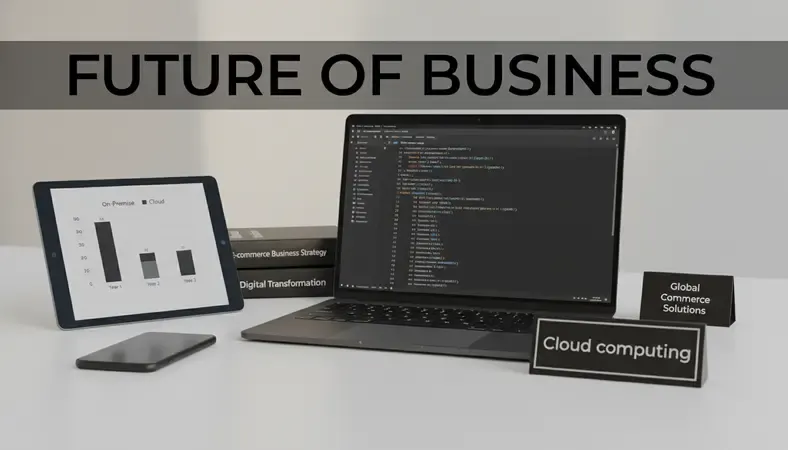
A mid-sized ecommerce business that previously spent $80,000 per year on server hardware, IT support, and data center space can often achieve the same computing capacity through a managed cloud provider for significantly less — while gaining capabilities their old infrastructure could never support, like automatic failover and global content delivery.
The benefits of cloud computing also include reduced software licensing costs. Many cloud platforms bundle tools that would otherwise require separate purchases — monitoring, security scanning, backup, and compliance reporting are often included in managed cloud packages.
For SaaS product companies, the ROI calculation is particularly direct. Cloud infrastructure allows engineering teams to provision new environments in minutes rather than weeks, which means faster product iteration and shorter time to market. That speed has measurable revenue impact.
Scalability and Flexibility
Scalability is where the benefits of cloud computing become most visible for growing businesses.
Traditional infrastructure forces you to make a bet on your future needs. You buy enough server capacity to handle your projected peak load — but if you underestimate, you face downtime. If you overestimate, you pay for idle hardware for years.
Cloud infrastructure eliminates that bet. You start with what you need today and expand in real time as demand grows.
How Cloud Scalability Works in Practice
Consider an ecommerce business running a flash sale. Traffic spikes from 500 concurrent users to 15,000 within an hour. On a fixed server, that spike crashes the site and loses sales. On a cloud platform with auto-scaling enabled, additional compute resources spin up automatically within seconds to handle the load, then scale back down once the sale ends.
The same principle applies to SaaS companies experiencing rapid user growth. A startup that goes from 200 users to 20,000 users in three months does not need to re-architect its infrastructure. The cloud scales with the growth.
The benefits of cloud technology also include geographic flexibility. Cloud providers operate data centers across multiple regions. You can deploy your application closer to your users — reducing latency and improving performance — without building or leasing physical infrastructure in those locations.
For small businesses, flexibility means something slightly different: the ability to add tools and capabilities without IT projects. Need a new collaboration platform? A cloud-based option is live in hours. Need to give a remote team member access to company systems? Cloud environments handle that without VPN configurations or hardware changes.
Security and Reliability
A common misconception about cloud computing is that it is less secure than keeping data on your own servers. The reality is nearly the opposite for most small and mid-sized businesses.
Major cloud providers invest billions of dollars annually in security infrastructure that no individual business could replicate. This includes physical data center security, network intrusion detection, encryption at rest and in transit, identity and access management systems, and dedicated security operations teams monitoring threats around the clock.
The benefits of cloud services in the security domain include:
- Automatic security patching: Cloud providers push security updates continuously. You do not need to manually patch operating systems or middleware.
- Data encryption: Most managed cloud platforms encrypt your data both when it is stored and when it is transmitted.
- Access controls: Role-based access management lets you control exactly who can see what data and what actions they can take.
- Compliance frameworks: For businesses handling payment data or personal information, managed cloud providers often maintain certifications like ISO 27001, SOC 2, and PCI-DSS, which would be extremely costly to achieve independently.
Reliability is the other side of this equation. Cloud providers offer Service Level Agreements (SLAs) that guarantee uptime — typically 99.9% or higher. That translates to less than nine hours of downtime per year. Most on-premise server setups cannot match that without significant redundancy investments.
For ecommerce businesses, reliability has a direct revenue impact. A site that goes down during a peak shopping period loses not just that transaction but customer trust. Cloud infrastructure with redundant systems and automatic failover protects against that scenario.
If you want to understand the specific steps involved in protecting your cloud environment, our guide on How to Secure Cloud Server covers the technical controls in detail.
Cloud Computing vs On-Premise Solutions
The benefits of cloud computing become clearest when placed directly against the on-premise alternative.
Cloud vs On-Premise: A Direct Comparison
| Factor | Cloud Computing | On-Premise |
|---|---|---|
| Upfront cost | Low — pay as you go | High — hardware purchase required |
| Maintenance | Managed by provider | Requires in-house IT team |
| Scalability | Instant, on-demand | Limited by physical hardware |
| Security updates | Automatic | Manual, often delayed |
| Disaster recovery | Built-in redundancy | Requires separate investment |
| Geographic reach | Global data centers | Single location |
| Downtime risk | Low — SLA guaranteed | Higher — single point of failure |
| Flexibility | Add/remove resources instantly | Fixed capacity |
On-premise infrastructure is not without its use cases. Businesses with highly specialized compliance requirements, very large data volumes that make bandwidth costs prohibitive, or specific regulatory restrictions on data location may have legitimate reasons to keep some workloads on-site.
But for the vast majority of small businesses, SaaS companies, and ecommerce operations, the benefits of cloud computing outweigh the on-premise model decisively. The capital savings alone often justify the switch — and the operational advantages compound over time.
The hybrid cloud model is worth mentioning here. Some businesses run sensitive workloads on private infrastructure while using public cloud for everything else. This approach captures many of the benefits of cloud hosting while maintaining control over specific data categories.
Is Cloud Computing Right for Your Business?
The benefits of cloud computing are real, but they are not equally relevant for every business in every situation. Here is how to think through the decision.
Signs Cloud Computing Is the Right Move
- You are spending significant time managing servers, patches, and backups instead of building your product or serving customers.
- Your infrastructure costs are fixed but your revenue is variable — you are paying for capacity you do not always use.
- Your team works remotely or across multiple locations and needs consistent access to shared systems.
- You have experienced downtime that cost you sales, customers, or reputation.
- You are growing quickly and need infrastructure that can keep pace without major IT projects.
- You handle customer data and need security and compliance capabilities beyond what your team can build.
When to Proceed Carefully
- You operate in a highly regulated industry with specific data residency requirements — confirm your cloud provider can meet them before migrating.
- Your internet connectivity is unreliable — cloud computing depends on a stable connection, so poor connectivity creates real operational risk.
- You have very large data volumes and limited bandwidth — data transfer costs can add up, and a thorough cost analysis is worth doing before committing.
For businesses evaluating hosting decisions more broadly, understanding the difference between Shared Vs Dedicated Hosting is a useful starting point before moving into cloud infrastructure discussions.
The benefits of cloud computing are most accessible when you work with a managed cloud provider rather than trying to configure and maintain cloud infrastructure yourself. Managed services handle the complexity so your team focuses on what matters.
Common Questions About Cloud Computing
What are the main benefits of cloud computing for small businesses?
The primary benefits of cloud computing for small businesses are cost reduction, access to enterprise-grade tools, and the ability to scale without hiring IT staff. Small businesses no longer need to purchase servers, manage backups, or worry about hardware failures. Cloud platforms give them the same infrastructure capabilities as much larger competitors, at a fraction of the cost.
Is cloud computing secure enough for sensitive business data?
Cloud computing is generally more secure than on-premise alternatives for most businesses. Major providers maintain certifications like SOC 2, ISO 27001, and PCI-DSS, and invest in security infrastructure that individual businesses cannot replicate. The benefits of cloud services include automatic encryption, continuous monitoring, and rapid security patching. That said, security is a shared responsibility — your team still needs to configure access controls and manage user permissions correctly.
How does cloud computing reduce IT costs?
Cloud computing shifts spending from capital expenditure (buying hardware) to operational expenditure (paying for usage). You eliminate hardware purchases, reduce maintenance labor, avoid data center costs, and stop paying for idle capacity. According to IBM's cloud economics research, businesses typically reduce IT infrastructure costs by 30–40% after migrating to cloud environments, though actual savings depend on workload type and current infrastructure spend.
What is the difference between cloud computing and traditional hosting?
Traditional hosting means your application runs on a fixed server — either one you own or one you rent from a hosting provider. Cloud computing means your application runs across a distributed network of servers with dynamic resource allocation. The benefits of cloud hosting over traditional hosting include automatic scaling, pay-per-use pricing, built-in redundancy, and global reach. Traditional hosting is simpler to understand but lacks the flexibility that growing businesses need.
Can ecommerce businesses benefit from cloud computing?
Ecommerce businesses are among the clearest beneficiaries of cloud computing. The ability to scale automatically during traffic spikes — sales events, seasonal peaks, viral moments — prevents the site crashes that cost revenue and damage customer trust. The benefits of cloud technology for ecommerce also include faster page load times through global content delivery networks, built-in payment security compliance, and the ability to integrate with modern commerce tools without infrastructure constraints.
Key Takeaways
The benefits of cloud computing — cost efficiency, instant scalability, enterprise-grade security, and operational reliability — are accessible to businesses of every size today. Whether you run a small business, a SaaS product, or an ecommerce operation, cloud infrastructure removes the ceiling on what your team can build and deliver.
Move your business to managed cloud infrastructure with Sygitech — reduce infrastructure overhead, improve uptime, and get expert support without building an internal IT team. Ready to get started? Visit Sygitech to learn more.