
Every SaaS company starts monitoring the same way. A few uptime checks. A Slack alert when the server goes down. Maybe a dashboard nobody checks until something breaks. In the beginning, this works fine. But products grow. They add features and onboard enterprise customers. As a result, they scale infrastructure across regions and services. Because of this, that early setup quietly turns into a liability. This is the core problem behind most SaaS monitoring strategies today. In short, they were built for an old version of the product, not the one running now.
Maybe your team fields more incidents than before. Or maybe you’re chasing root causes across a dozen microservices. Sometimes customers report problems before your alerts do. If so, you’re not imagining it. In fact, your monitoring strategy hasn’t kept pace with your product. That gap is exactly where downtime, churn, and burnout tend to live.
The Monitoring Setup That Worked at 10 Customers Breaks at 10,000
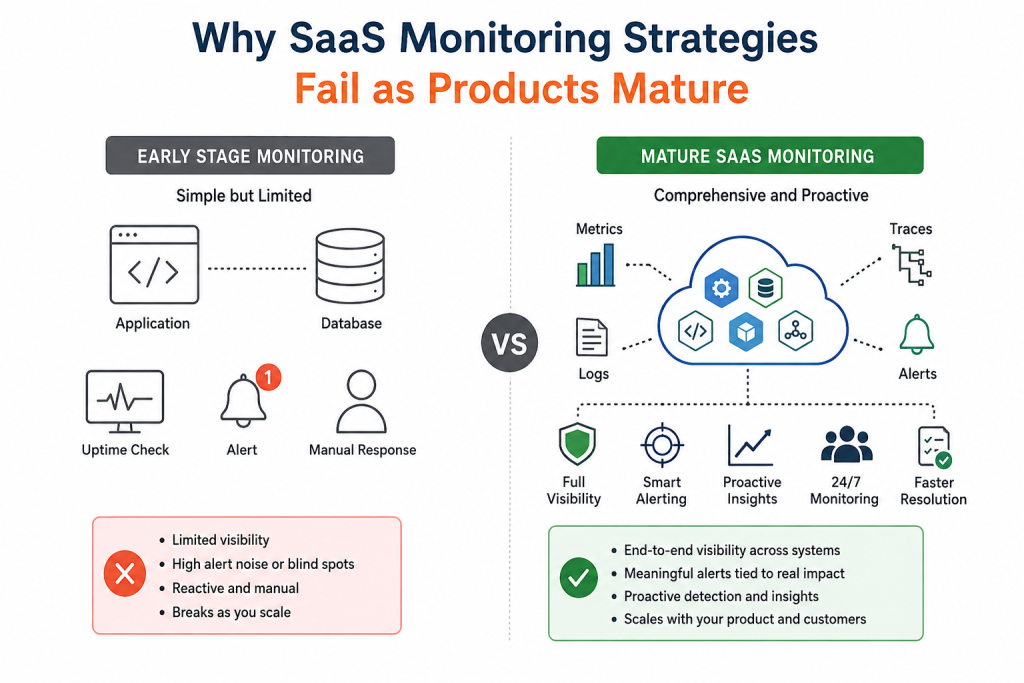
Early stage SaaS monitoring is simple by necessity. One app server. One database. A small team that knows the whole system by heart. Because of this, a basic uptime monitor covers most of what can go wrong. A few CPU and memory alerts handle the rest.
However, maturity changes the shape of the problem entirely.
- Architecture gets distributed. One monolith becomes a dozen microservices. Consequently, each has its own failure modes and dependencies.
- Infrastructure spans environments. Multi region deployments and hybrid cloud setups add complexity. In addition, third party APIs introduce failure points a single dashboard can’t capture.
- Customer expectations rise. Enterprise clients expect SLAs and uptime guarantees. Therefore, they want proactive communication, not a support ticket after the fact.
- Data volume explodes. Logs, metrics, and traces multiply fast. As a result, most teams can’t build tooling quickly enough to keep up.
The result is a monitoring strategy that once felt thorough. Now, it produces too much noise or dangerous blind spots. Often, it produces both at once.
Alert Fatigue Is a Symptom, Not the Problem
One clear sign of an aging monitoring setup is alert fatigue. As systems grow complex, teams respond by adding more alerts. More thresholds. More dashboards. On the surface, it feels like diligence. In practice, though, it buries the signal that actually matters.
This isn’t just an anecdotal problem. In fact, recent industry research on production reliability backs it up. Most on call teams now receive at least ten alerts a day. However, the majority say fewer than a third are actually actionable. As a result, engineers regularly ignore or dismiss alerts just to keep functioning. Consequently, many organizations have already faced an outage tied to a missed alert.
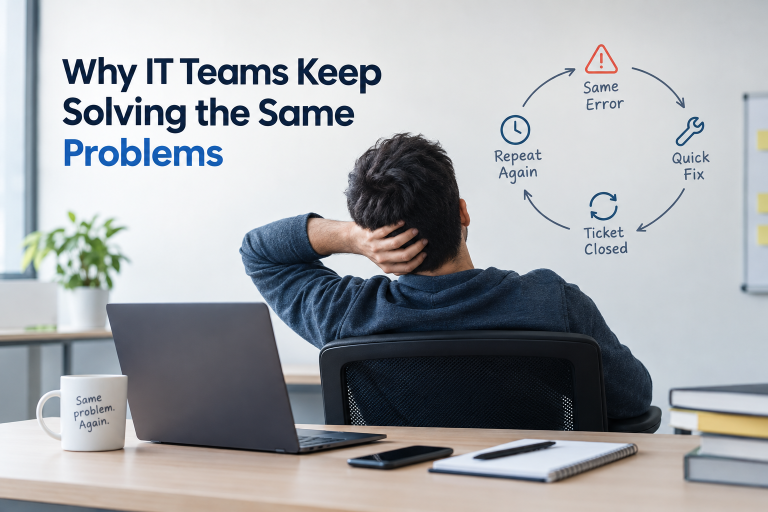
So, engineers start muting notifications. On call rotations become something to dread. Meanwhile, real incidents get lost in a sea of false positives. Ironically, scaling without rethinking monitoring architecture reduces visibility instead of improving it.
Therefore, reactive observability becomes a real business risk. It stops being just an engineering annoyance.
The Real Cost of Outdated Monitoring
It’s tempting to treat monitoring gaps as a minor inconvenience. However, they’re not. As products mature, the cost of blind spots compounds.
Downtime hits revenue directly. For example, industry benchmarking puts the median cost of a high impact incident in the millions per hour. That’s according to New Relic’s 2025 Observability Forecast. Therefore, for a SaaS product with paying customers, every unmonitored failure is a potential breach.
Mean time to resolution grows. Without proper tracing across services, engineers piece together incidents manually. As a result, that takes hours instead of minutes. Analysts have also found that most outages involve failures that were technically detectable earlier. In other words, better monitoring, not more headcount, was the missing piece.
Customer trust erodes. When customers report problems before your monitoring does, it sends a signal. Specifically, it suggests the product isn’t being watched closely enough. In competitive SaaS markets, that perception is hard to undo.
On call burnout accelerates. Constant noisy alerts wear down even strong engineering teams. Meanwhile, unclear ownership makes it worse. This often leads to attrition right when institutional knowledge matters most.
Still, none of this is inevitable. Rather, it’s the predictable outcome of a monitoring strategy that never evolved past its early roots.
Why “More Tools” Isn’t the Fix
The common instinct when monitoring fails is to buy another tool. A new APM platform. Another logging service. A shinier dashboard. Sometimes this helps. Often, though, it just adds another disconnected system to an already fragmented stack.
The deeper issue usually isn’t tooling. Instead, it’s strategy. Mature products need monitoring that is:
- Correlated, not siloed. Metrics, logs, and traces connect across services, so an incident tells one coherent story, not five disconnected ones.
- Prioritized, not exhaustive. Alerting ties to business impact and customer experience instead of just infrastructure thresholds.
- Proactive, not reactive. Anomaly detection catches degradation early, before it becomes an outage.
- Owned, not orphaned. Escalation paths stay clear, so alerts reach the right person with context every time.
This is why growing SaaS companies often shift monitoring outside the core team. Instead, they bring in specialists who focus on it full time. This isn’t a failure of the internal team. Rather, it’s a recognition that observability at scale is its own discipline.
What a Mature Monitoring Strategy Actually Looks Like
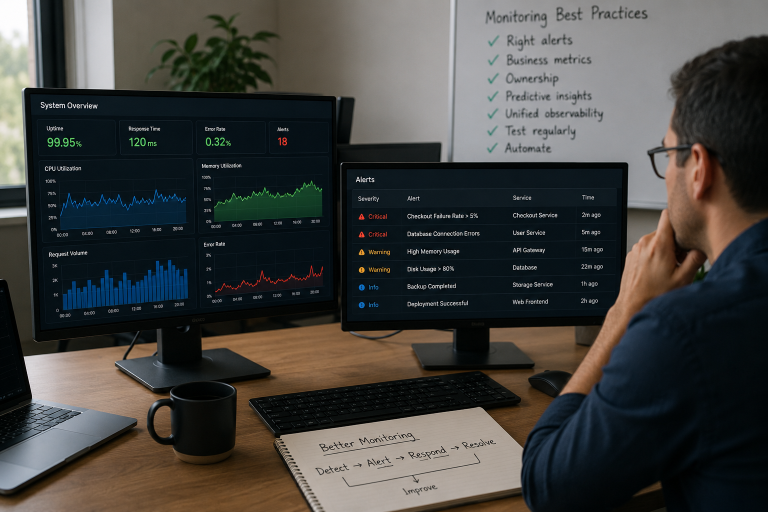
Companies that get this right treat monitoring as real infrastructure. It gets designed, maintained, and improved continuously. In other words, it isn’t bolted on after an outage.
That typically means investing in cloud management services that cover every environment. Cloud, hybrid, and on prem all need full visibility. In addition, alerting should reflect actual business risk, not raw system noise. It also means having eyes on the system around the clock. Because incidents don’t wait for business hours, monitoring can’t either.
Pairing this with automated runbooks strengthens the whole system. Likewise, clear escalation policies help. Regular reviews of what’s actually monitored close the remaining gaps. Together, these turn monitoring from a cost center into a real competitive advantage.
Rebuilding Your SaaS Monitoring Strategy Doesn’t Mean Starting Over
Fixing a broken monitoring setup rarely means ripping everything out. Instead, it usually starts with an honest audit.
- Map what’s actually being monitored against what’s actually running in production. Gaps show up fast.
- Review alert volume and accuracy over the last few months. If your team mutes more than it acts on, thresholds are wrong.
- Trace a recent incident end to end. Note detection, diagnosis, and resolution time separately. That’s your real MTTR, not the one on the dashboard.
- Identify ownership gaps. If an alert fires and nobody owns it, that’s a process problem monitoring is exposing.
- Decide what needs continuous, expert coverage. Everything else can stay with your internal team.
This last step is often where experienced IT consulting services pay off. Specifically, a well architected SaaS monitoring strategy needs specialists who live in observability tooling daily. In house teams are stretched across product, infrastructure, and support. As a result, they rarely have the bandwidth to catch every failure consistently.
Conclusion
Monitoring isn’t a one time setup. Rather, it’s a system that has to mature alongside the product it protects. The strategies that worked for your first thousand customers won’t scale to your next ten thousand. Therefore, recognizing that gap early matters most. It’s better to catch it before an outage forces the conversation. Ultimately, that’s what separates SaaS companies that scale smoothly from those that spend their growth years firefighting.
If your monitoring always feels one step behind your product, don’t just add more dashboards. Instead, rethink the SaaS monitoring strategy itself. Bring in the continuous, expert coverage that mature, high growth SaaS products actually need.