
Somewhere between “let’s use the best cloud for each workload” and “why does nobody know what’s running in production,” things get messy. Companies lose the plot on their own infrastructure. It doesn’t happen overnight. It happens one server, one project, one quick decision at a time. Eventually the environment grows bigger than anyone’s mental map of it.
That’s the reality behind hybrid cloud management for many growing businesses. A mix of on-prem systems, private cloud, and two or three public providers sounds efficient on paper. In practice, it often turns into a maze of dashboards and mismatched permissions. By month three, nobody can fully explain the costs either.
None of this means your team is doing something wrong. Hybrid setups are simply harder to run than single-platform ones. Without a deliberate plan behind them, the mess grows faster than most people expect. This is exactly the gap that solid cloud strategy and planning services are meant to close. Let’s look at why the complexity builds up, and what actually helps.
Why the Complexity Piles Up So Fast
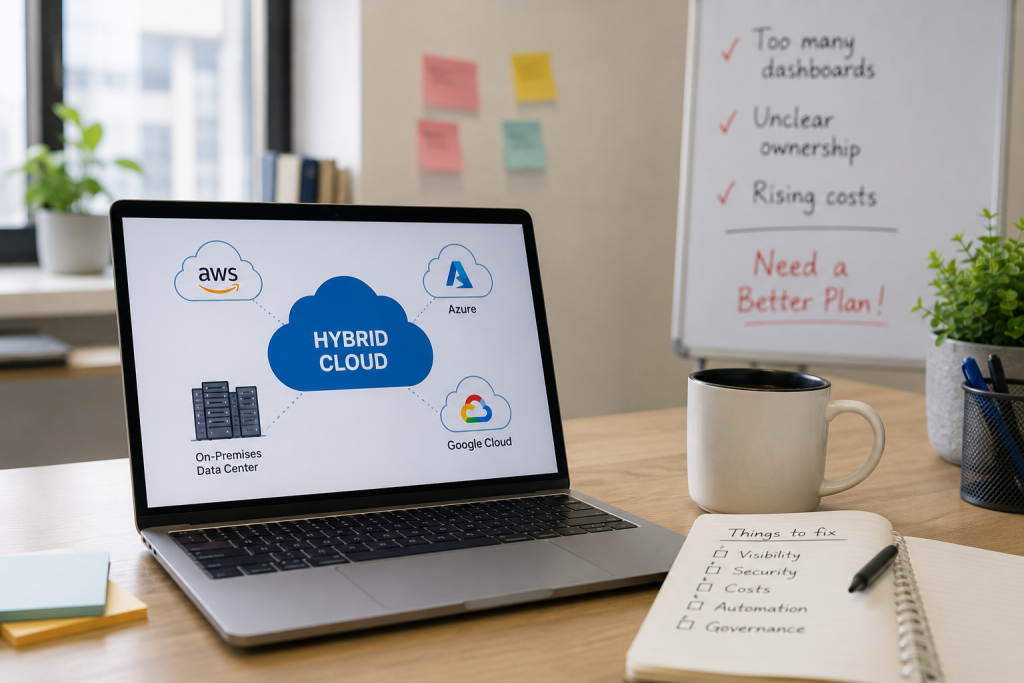
Run workloads across AWS, Azure, Google Cloud, and on-prem racks at the same time, and problems don’t just add up. They compound. Every platform has its own console, billing quirks, and security model. Each has its own way of naming things too. Add a handful of SaaS tools and a private data center, and a clear picture becomes hard to get.
Here’s where things usually go wrong.
1. Fragmented Visibility Across Platforms
The single biggest reason hybrid environments spiral out of control is a lack of unified visibility. Your team might have excellent monitoring on AWS but almost none on the private cloud side. When something breaks, engineers bounce between five different dashboards trying to piece together what happened. By the time they figure it out, the damage is already done.
Small issues go unnoticed until they turn into expensive outages. This happens simply because nobody had one reliable view of the whole environment. You can’t fix what you can’t see. In a hybrid setup, seeing everything at once is harder than it sounds.
2. Inconsistent Security Policies
Every cloud provider takes a different approach to identity management and access controls. Compliance settings vary too. When security policies aren’t standardized across environments, gaps appear, and attackers love gaps. A configuration locked down tightly on your private cloud might be wide open on a public instance. That happens simply because nobody applied the same rules consistently.
This is one of the most dangerous outcomes of poor hybrid cloud management. Security teams end up reacting to incidents instead of preventing them. There’s no single source of truth for policy enforcement across the whole environment.
3. Runaway Costs With No Clear Owner
Ask any finance team about cloud spend and you’ll probably get a sigh, maybe a laugh. Hybrid environments make cost tracking harder because usage is scattered across different billing systems. Each system has its own pricing logic, discounts, and reserved instance rules. Idle resources on one platform sit forgotten while another gets over-provisioned “just to be safe.”
This is where good cloud optimization services actually earn their keep. Flexera’s 2026 State of the Cloud Report put a number on this worth sitting with. An estimated 29% of cloud spend now goes to waste, the highest level in five years. AI workloads and newer, harder-to-forecast services are driving much of it. Nobody sets out to waste money on purpose. It just happens quietly, when nobody is really watching cost across the whole environment.
4. Manual Processes That Don’t Scale
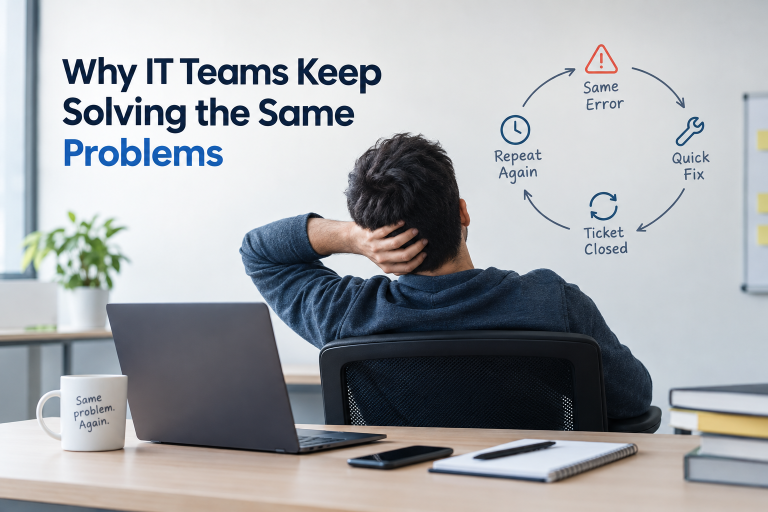
Plenty of teams still lean on manual scripts, spreadsheets, and tribal knowledge. That works fine when you have three servers. It falls apart fast when you have three hundred spread across multiple clouds. Manual processes invite human error and slow down releases. They also create a single point of failure. That risk shows up whenever the one engineer who “knows how it all works” is out sick or on vacation.
The fix isn’t complicated in theory, even if it takes real work in practice. Replace fragile manual workflows with automated, repeatable processes. They should behave the same way no matter which cloud they’re running on.
5. Skill Gaps and Tool Sprawl
Every cloud platform requires specialized knowledge. Finding engineers genuinely proficient across AWS, Azure, GCP, and on-prem infrastructure at once is rare and expensive. Most internal teams end up with pockets of expertise rather than full coverage. Certain parts of the environment get expert attention. Others get whatever time is left over.
On top of that, tool sprawl makes things worse. Teams often adopt a different monitoring, deployment, and security tool for each platform. That’s usually just because it’s what was available at the time. The result is a fragmented tech stack that’s expensive to maintain. It’s also nearly impossible to fully master.
6. No Unified Governance Model
Governance might be the quietest killer of hybrid cloud control, and the easiest to overlook. Who approves new resource provisioning? Who owns compliance reporting? Who decides when a workload should move from one environment to another? In a lot of organizations, the honest answer is “it depends.” That’s really just another way of saying nobody owns it.
Without a clear framework in place, decisions get made in silos. Duplicate resources get spun up by different teams solving the same problem twice. Technical debt piles up quietly until it turns into an actual crisis.
The Real Cost of Losing Control
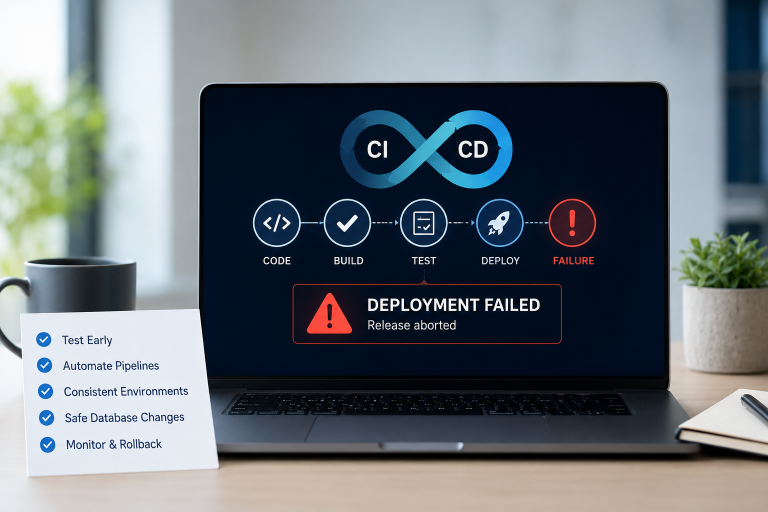
When a hybrid environment becomes unmanageable, the fallout shows up almost everywhere at once. Incident response slows to a crawl, because root cause analysis takes hours instead of minutes. Compliance risk creeps in through inconsistent policy enforcement. Cloud bills balloon in ways finance genuinely can’t explain. Engineering teams get stuck firefighting instead of building anything new. Deployment windows get missed because the release process is too fragile to trust. Innovation quietly grinds to a halt because everyone’s too busy keeping the lights on.
None of that is inevitable, though it can feel that way from inside it. It’s simply what happens when complexity is left unmanaged for too long. And it’s fixable with the right approach.
What This Actually Looks Like in Practice
A mid-sized [industry, e.g., healthcare logistics] company we worked with grew into a hybrid setup almost by accident. They started on-prem, then moved workloads to AWS during a product push. Later they added Azure when a new business unit came on board with its own vendor preference. Nobody planned it that way. It just happened, one project at a time, which is exactly how most hybrid sprawl starts.
By the time they asked for help, engineering was spending an estimated [X hours per week] reconciling what ran where. Their monthly cloud bill had crept up by roughly [X%] over two years, without a matching rise in workload. Three different teams had spun up near-identical storage buckets. None of them knew the others existed.
The fix wasn’t a rip-and-replace migration. It was a centralized monitoring layer across all three environments, plus one access policy applied consistently everywhere. Clear ownership got assigned for provisioning decisions going forward. Within [X months], unplanned incident time dropped by [X%]. Finance finally had one number they trusted, instead of three they didn’t.
The pattern repeats often enough that it’s worth naming. The technology was never really the problem. The lack of a plan for managing it was.
How to Regain Control of Your Hybrid Cloud
Here’s the good news: hybrid cloud management doesn’t have to feel like herding cats forever. Organizations that get this right usually aren’t doing anything magical. They’re just deliberate about a few things.
They centralize visibility first. That gives them one place to see resource usage, security posture, and performance across every environment. No more five disconnected dashboards. They standardize security and access policies, so the same rules apply everywhere regardless of platform. They automate the deployment and monitoring work that humans shouldn’t be doing by hand. And they put real governance in place, so provisioning, cost, and compliance decisions have a clear owner.
And often, they start with getting the strategy right, rather than jumping straight into tooling. Figuring out what goes where, why, and who’s accountable saves a lot of pain down the line. It’s a lot cheaper to plan for complexity than to untangle it after the fact.
Turning Complexity Into a Competitive Advantage
Hybrid cloud isn’t going away, and honestly, it shouldn’t. The flexibility to run workloads wherever makes the most sense is a genuine business advantage. That’s true whether the driver is cost, performance, compliance, or latency. The problem was never the hybrid model itself. It’s the lack of a coherent strategy for managing it.
With centralized visibility, consistent governance, automation, and expert support, hybrid cloud management changes. It shifts from being a constant source of stress to being a genuine strength. Your team gets to control the infrastructure, on their own terms, with confidence. And no more 2 a.m. fire drills.
If your hybrid environment feels like it’s running on duct tape and good intentions, that’s solvable. It’s not a permanent state. The organizations that get ahead of it now will scale smoothly later. The ones that don’t will keep paying for the complexity, one incident at a time.